
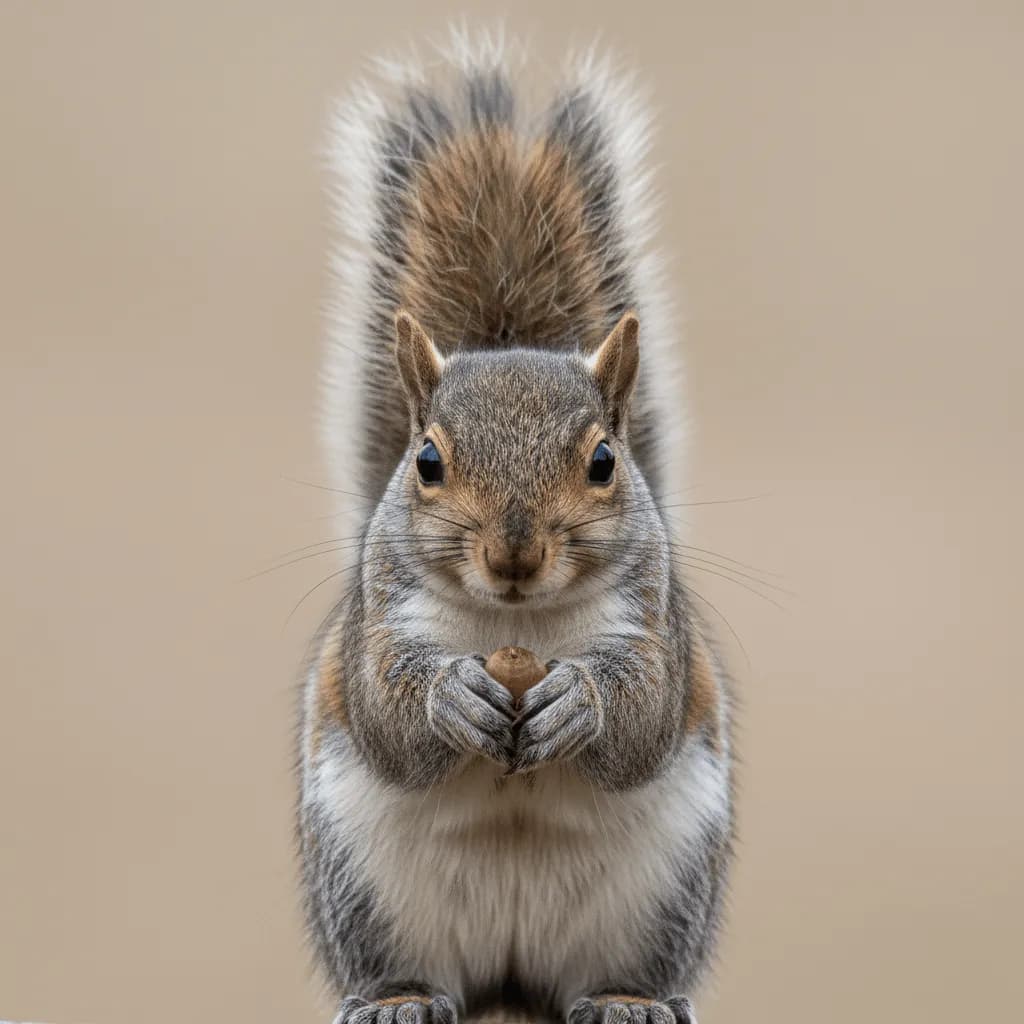
Eastern Gray Squirrel
Sciurus carolinensis
Also known as: Gray Squirrel, Grey Squirrel
The Eastern Gray Squirrel is the most common tree squirrel in the eastern United States and one of the most frequent wildlife nuisances in residential areas. It readily exploits attics, soffits, and wall voids for nesting. Its powerful incisors can gnaw through wood, vinyl, and even soft metals, causing significant structural and electrical damage.
Identification
Size
230-300 mm body; tail adds 190-250 mm
Color
Gray with a white to pale-gray underside; occasional rusty or brownish tones on face and flanks
Key Trait
Bushy gray tail with white-tipped hairs; large, conspicuous ears without tufts; very comfortable around humans in urban settings.
Behavior & Habitat
Diurnal and highly active year-round. Caches food in scattered locations. Enters structures through gaps as small as 4 cm, often enlarging existing openings. Chews on wiring, PVC pipes, and structural wood inside attics.
Habitat: Hardwood and mixed forests, suburban neighborhoods, parks, and urban areas. Nests in tree cavities or builds leaf nests (dreys); frequently colonizes attics and garages.
Diet: Acorns, hickory nuts, walnuts, seeds, buds, berries, fungi, bird eggs, and birdseed from feeders.
Signs of Infestation
- Scratching, scurrying, or rolling sounds in the attic or walls, especially at dawn and dusk
- Gnaw marks on fascia boards, soffits, roof edges, or wiring
- Scattered droppings resembling dark, oblong pellets in attic insulation
Risks & Damage
Gnaws through roof decking, fascia, and framing lumber to create and enlarge entry points.
Chews on electrical wiring inside attics and walls, creating a serious fire hazard.
Droppings and urine contaminate insulation and can harbor Leptospira bacteria and Salmonella.
Prevention Tips
- 1.Trim tree branches at least 2 meters back from the roofline
- 2.Cover attic vents and soffits with heavy-gauge galvanized hardware cloth
- 3.Remove or squirrel-proof bird feeders near the home
Why DIY Treatment Often Falls Short
Squirrels are persistent and intelligent; they quickly find alternate entry points after one is sealed. Sealing holes while animals are still inside can cause them to chew destructively to escape, worsening damage.
Professional Treatment
Professionals use one-way exclusion doors that allow squirrels to leave but not re-enter, then seal all entry points with metal flashing or heavy hardware cloth. Attic restoration includes removing contaminated insulation and sanitizing.
Frequently Asked Questions
Can squirrels really cause a house fire?
When are squirrels most likely to enter my attic?
Will mothballs or ultrasonic devices keep squirrels out?
Need Help With Eastern gray squirrel?
If you're seeing signs of eastern gray squirrel in or around your home, professional treatment is the fastest way to stop the problem. Lotus Pest Control offers free inspections to identify the issue and recommend the right solution.
At a Glance
- Category
- Wildlife
- Scientific Name
- Sciurus carolinensis
- Size
- 230-300 mm body; tail adds 190-250 mm
- Color
- Gray with a white to pale-gray underside; occasional rusty or brownish tones on face and flanks
- Key Trait
- Bushy gray tail with white-tipped hairs; large, conspicuous ears without tufts; very comfortable around humans in urban settings.
- Regions
- Southeast, Northeast, Midwest, Mid Atlantic, Gulf Coast, Great Plains
- Threat Level
- Moderate
- Risk Types
- structuralelectricalnuisance
- Seasonal Activity
- MarAprMayJunJulAugSepOctNovDecJanFebnonelowmoderatehighpeak