
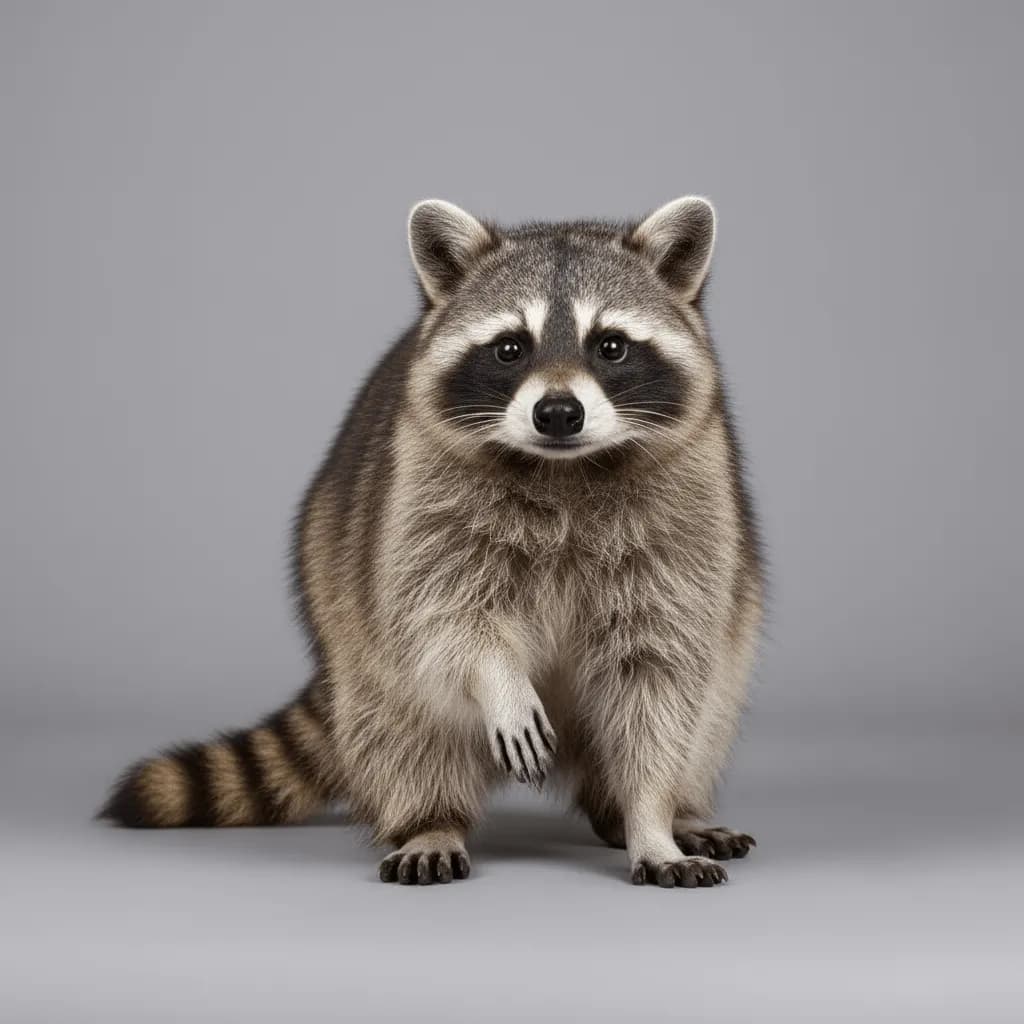
Raccoon
Procyon lotor
Also known as: Common Raccoon, Northern Raccoon, Coon
The Raccoon is one of the most adaptable urban wildlife species in North America. Its intelligence and manual dexterity allow it to exploit garbage, pet food, and structural weaknesses with remarkable efficiency. Raccoons frequently den in attics, chimneys, and crawl spaces, where they can cause extensive damage and leave behind hazardous waste.
Identification
Size
400-700 mm body; 5-12 kg weight
Color
Grizzled gray-brown with a distinctive black mask across the eyes and a bushy, ringed tail
Key Trait
Black facial mask and bushy tail with alternating dark and light rings; highly dexterous front paws capable of opening latches, turning knobs, and prying open containers.
Behavior & Habitat
Primarily nocturnal but occasionally active at dusk and dawn. Excellent climbers that easily scale downspouts, trees, and brick walls. Highly intelligent with exceptional problem-solving ability. Females seek enclosed spaces for denning, especially in spring when raising young.
Habitat: Forests, wetlands, suburban neighborhoods, and urban areas. Dens in hollow trees, rock crevices, storm drains, attics, chimneys, and under decks.
Diet: Omnivorous - garbage, pet food, birdseed, fruit, corn, crayfish, frogs, eggs, insects, and small mammals. Washes food when water is available.
Signs of Infestation
- Scattered garbage and overturned trash cans, especially overnight
- Heavy thumping and vocal sounds (chittering, growling, purring) in the attic at night
- Raccoon latrines - communal defecation sites on flat surfaces like roofs, decks, or logs
Risks & Damage
Primary carrier of raccoon roundworm (Baylisascaris procyonis), which can cause severe neurological disease in humans. Also a major rabies vector.
Tears off shingles, rips open soffits, and damages ductwork to enter attics. Urine saturates insulation and ceiling drywall.
Attacks small pets, particularly cats and small dogs. Transmits rabies, canine distemper, and leptospirosis to pets.
Prevention Tips
- 1.Secure garbage cans with locking lids or store them inside a garage until pickup day
- 2.Remove outdoor pet food dishes before dark
- 3.Cap chimneys and reinforce soffits and attic vents with heavy-gauge steel screening
Why DIY Treatment Often Falls Short
Raccoons are strong, intelligent, and dexterous enough to defeat most DIY deterrents. They can tear off lightweight screening, open bungee-corded lids, and return persistently. Attempting to trap and relocate raccoons is illegal in many jurisdictions and often ineffective.
Professional Treatment
Licensed wildlife professionals install heavy-duty one-way exclusion doors and reinforce entry points with raccoon-grade galvanized steel. Attic latrines are carefully decontaminated to destroy Baylisascaris eggs, which are resistant to most disinfectants. Contaminated insulation is removed and replaced.
Frequently Asked Questions
How dangerous is raccoon feces?
Can I relocate a raccoon myself?
Are raccoons active in winter?
Need Help With Raccoon?
If you're seeing signs of raccoon in or around your home, professional treatment is the fastest way to stop the problem. Lotus Pest Control offers free inspections to identify the issue and recommend the right solution.
At a Glance
- Category
- Wildlife
- Scientific Name
- Procyon lotor
- Size
- 400-700 mm body; 5-12 kg weight
- Color
- Grizzled gray-brown with a distinctive black mask across the eyes and a bushy, ringed tail
- Key Trait
- Black facial mask and bushy tail with alternating dark and light rings; highly dexterous front paws capable of opening latches, turning knobs, and prying open containers.
- Regions
- Southeast, Northeast, Midwest, Mid Atlantic, Gulf Coast, Pacific Northwest, Southwest, Mountain West, Great Plains, West Coast
- Threat Level
- High
- Risk Types
- healthstructuralpetsnuisance
- Seasonal Activity
- MarAprMayJunJulAugSepOctNovDecJanFebnonelowmoderatehighpeak