
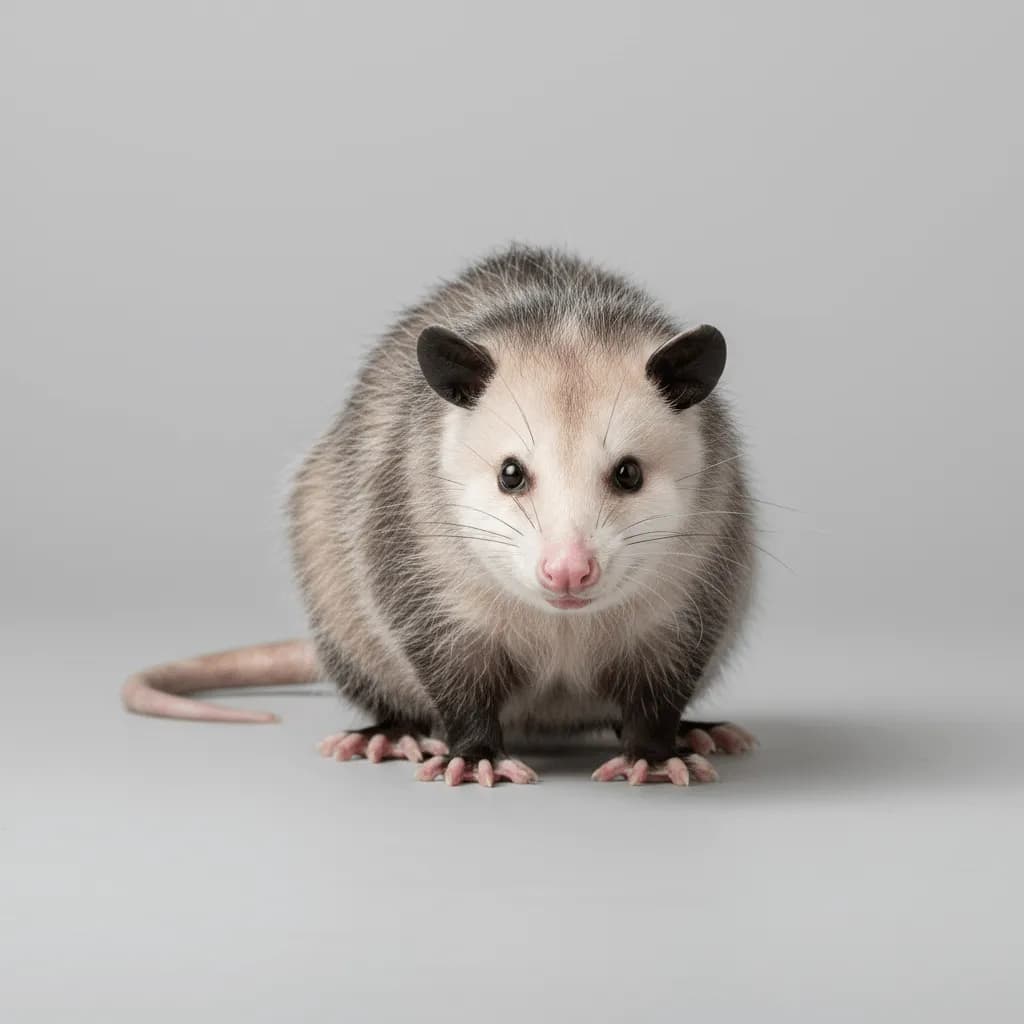
Virginia Opossum
Didelphis virginiana
Also known as: Opossum, Possum, North American Opossum
The Virginia Opossum is the only marsupial native to North America. It is a frequent visitor to suburban yards, garages, crawl spaces, and decks. While generally non-aggressive and beneficial as a consumer of ticks and carrion, opossums can create sanitation issues, steal pet food, and occasionally damage structures when denning.
Identification
Size
330-500 mm body; 2.5-6 kg weight
Color
Coarse grayish-white fur with a white face; hairless, prehensile tail; naked, dark ears
Key Trait
North America's only marsupial; pointed white face; hairless, rat-like prehensile tail; infamous for 'playing possum' - entering a catatonic state when threatened.
Behavior & Habitat
Nocturnal and nomadic, rarely staying in one den for more than a few days. Slow-moving and non-aggressive; feigns death ('playing possum') when cornered. Poor climber compared to raccoons but uses prehensile tail for balance.
Habitat: Deciduous forests, farmland, suburban yards, under decks, in garages, crawl spaces, and brush piles. Opportunistic denner that uses whatever shelter is available.
Diet: Omnivorous - ticks, insects, carrion, fruit, garbage, pet food, birdseed, snails, slugs, and small rodents.
Signs of Infestation
- Pet food dishes emptied overnight with no other obvious cause
- Shuffling and hissing sounds under decks, in crawl spaces, or in garages
- Unpleasant odor from droppings and urine in enclosed denning areas
Risks & Damage
Droppings can contain the parasite Sarcocystis neurona, which causes EPM (equine protozoal myeloencephalitis) in horses.
Raids pet food, overturns garbage, and dens in crawl spaces and garages.
Can transmit fleas, ticks, and leptospirosis to pets. May bite defensively if cornered by a dog.
Prevention Tips
- 1.Remove outdoor pet food dishes before nightfall
- 2.Seal openings under decks and porches with hardware cloth, buried at least 15 cm deep
- 3.Keep garbage cans securely lidded and eliminate brush piles near the home
Why DIY Treatment Often Falls Short
Opossums are nomadic and often leave on their own, making it seem like a DIY approach worked. However, unsecured openings attract new animals repeatedly. Exclusion must be comprehensive to prevent a revolving door of denning wildlife.
Professional Treatment
Professionals install permanent exclusion barriers under decks and around crawl spaces. One-way doors allow current residents to leave. Entry points are sealed with materials that resist gnawing and digging.
Frequently Asked Questions
Are opossums dangerous?
Do opossums really eat ticks?
Will an opossum leave on its own?
Need Help With Virginia opossum?
If you're seeing signs of virginia opossum in or around your home, professional treatment is the fastest way to stop the problem. Lotus Pest Control offers free inspections to identify the issue and recommend the right solution.
At a Glance
- Category
- Wildlife
- Scientific Name
- Didelphis virginiana
- Size
- 330-500 mm body; 2.5-6 kg weight
- Color
- Coarse grayish-white fur with a white face; hairless, prehensile tail; naked, dark ears
- Key Trait
- North America's only marsupial; pointed white face; hairless, rat-like prehensile tail; infamous for 'playing possum' - entering a catatonic state when threatened.
- Regions
- Southeast, Mid Atlantic, Northeast, Midwest, Gulf Coast, Great Plains, West Coast, Pacific Northwest
- Threat Level
- Low
- Risk Types
- nuisancehealthpets
- Seasonal Activity
- MarAprMayJunJulAugSepOctNovDecJanFebnonelowmoderatehighpeak