
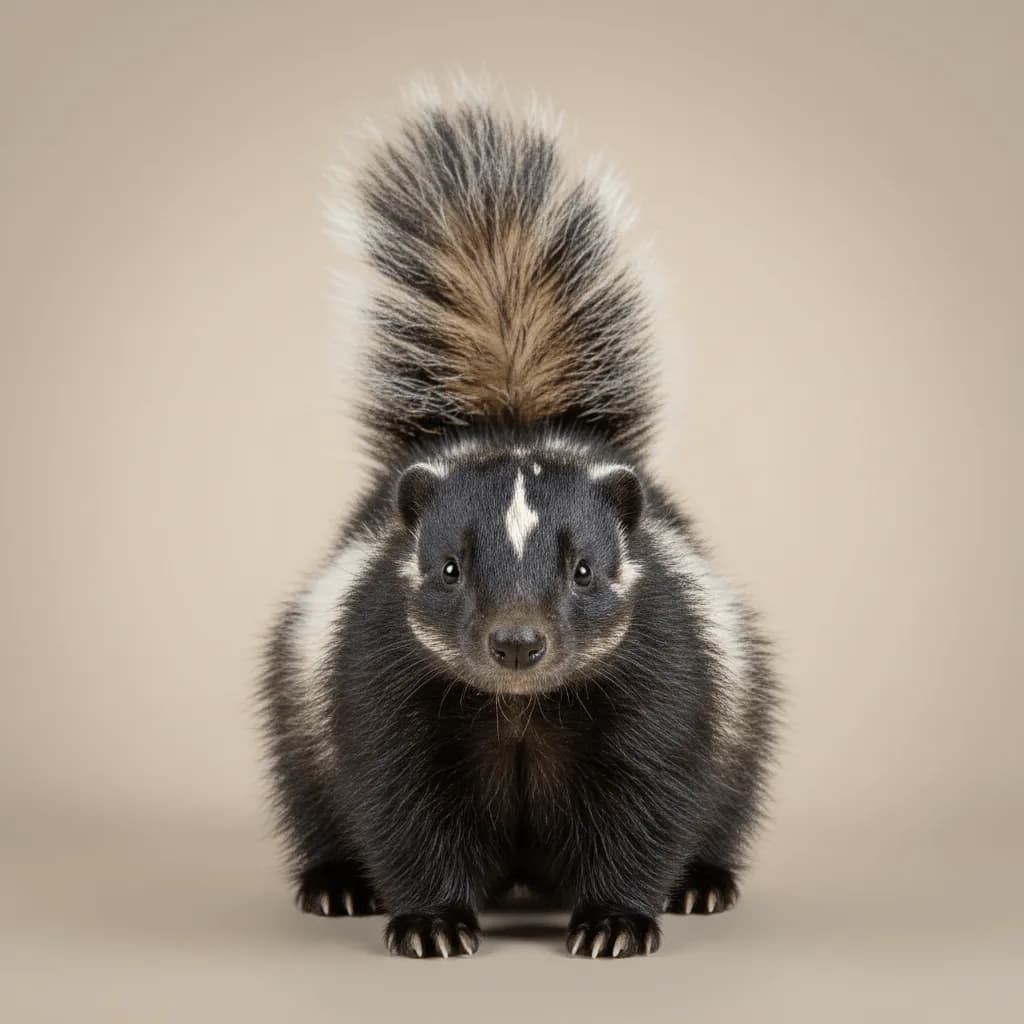
Striped Skunk
Mephitis mephitis
Also known as: Common Skunk
The Striped Skunk is well known for its potent defensive spray, which can cause temporary blindness and nausea. Skunks commonly den under porches, decks, and foundations, and their digging for grubs leaves conspicuous cone-shaped holes in lawns. They are a primary rabies vector across much of the United States.
Identification
Size
330-460 mm body; 2.5-5.5 kg weight
Color
Black with two prominent white stripes running from head to tail; white patch on forehead
Key Trait
Bold black-and-white coloring serves as a warning; can spray a pungent musk accurately up to 4.5 meters; distinctive waddling gait.
Behavior & Habitat
Primarily nocturnal and slow-moving. Digs small, cone-shaped holes in lawns to reach grubs and insects. Warns before spraying by stamping feet, raising tail, and doing a hand-stand display. Generally tolerant of humans unless cornered or surprised.
Habitat: Forest edges, meadows, suburban neighborhoods, and farmland. Dens under porches, decks, sheds, and in rock piles, woodpiles, and abandoned burrows.
Diet: Insects and grubs (primary diet), small rodents, bird eggs, fruit, corn, garbage, and pet food.
Signs of Infestation
- Small, cone-shaped holes dug in the lawn where skunks have foraged for grubs
- Persistent, strong skunk odor around the foundation or under a deck
- Shallow burrow entrances under porches, decks, or concrete slabs
Risks & Damage
Major rabies vector - skunks are one of the top carriers of rabies in North America.
Sprays pets that approach too closely. Dogs frequently get sprayed. Transmits rabies, distemper, and leptospirosis to pets.
Digs numerous small holes in lawns and gardens while foraging for grubs.
Prevention Tips
- 1.Seal gaps under decks, porches, and sheds with heavy hardware cloth buried at least 30 cm underground
- 2.Treat lawns for grubs to reduce the food source attracting skunks
- 3.Bring pet food indoors before dark and secure garbage cans
Why DIY Treatment Often Falls Short
Attempting to trap or exclude skunks without professional training almost always results in a spraying incident. The musk is extremely persistent and nearly impossible to fully eliminate from clothing, pets, and home interiors.
Professional Treatment
Licensed wildlife professionals use specialized live traps with spray-shield covers and relocate or exclude skunks without triggering a spray. Foundation exclusion barriers are installed to prevent re-entry. Grub treatment reduces the food attractant.

Frequently Asked Questions
How do I get skunk smell off my dog?
Are skunks aggressive?
Can skunks spray through a live trap?
Need Help With Striped skunk?
If you're seeing signs of striped skunk in or around your home, professional treatment is the fastest way to stop the problem. Lotus Pest Control offers free inspections to identify the issue and recommend the right solution.
At a Glance
- Category
- Wildlife
- Scientific Name
- Mephitis mephitis
- Size
- 330-460 mm body; 2.5-5.5 kg weight
- Color
- Black with two prominent white stripes running from head to tail; white patch on forehead
- Key Trait
- Bold black-and-white coloring serves as a warning; can spray a pungent musk accurately up to 4.5 meters; distinctive waddling gait.
- Regions
- Midwest, Great Plains, Northeast, Southeast, Mid Atlantic, Mountain West, Southwest, Pacific Northwest, West Coast, Gulf Coast
- Threat Level
- Moderate
- Risk Types
- healthpetslawnnuisance
- Seasonal Activity
- MarAprMayJunJulAugSepOctNovDecJanFebnonelowmoderatehighpeak