
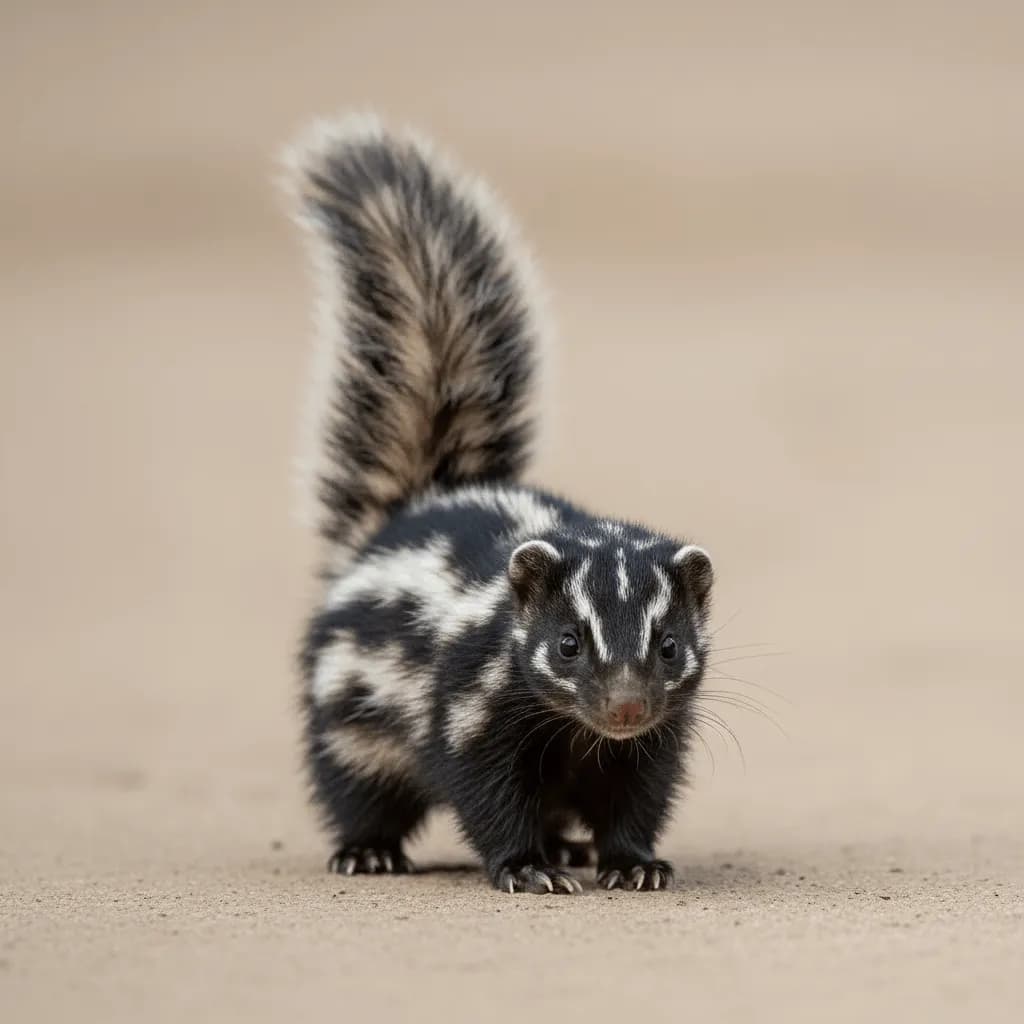
Spotted Skunk
Spilogale putorius
Also known as: Eastern Spotted Skunk, Civet Cat, Polecat
The Spotted Skunk is a smaller, more agile relative of the striped skunk that is declining in parts of its range. It is a better climber than the striped skunk and more likely to enter elevated spaces like attics and barns. Its dramatic handstand display before spraying is a well-known defensive behavior.
Identification
Size
180-340 mm body; 0.4-1.0 kg weight
Color
Black with irregular white spots and broken stripes; white spot on forehead
Key Trait
Much smaller than the striped skunk; irregular white spots and broken stripes instead of solid stripes; performs a dramatic handstand before spraying.
Behavior & Habitat
Nocturnal and more agile and active than the striped skunk. Climbs well and may enter elevated structures. Performs a distinctive handstand on its front paws before spraying, aiming over its head. More secretive and less commonly encountered than striped skunks.
Habitat: Forest edges, rocky outcrops, farmland, barns, and outbuildings. Dens in rock crevices, woodpiles, burrows, and under buildings.
Diet: Insects, small rodents, bird eggs, corn, berries, and carrion. More insectivorous than the striped skunk.
Signs of Infestation
- Strong skunk odor around outbuildings or barns, especially from elevated areas
- Small droppings containing insect exoskeletons near den openings
- Sightings of a small, spotted black-and-white animal at night
Risks & Damage
Rabies vector, though less frequently encountered than striped skunks.
Sprays pets and can transmit rabies and distemper through bites.
Strong spray odor can permeate structures; dens in barns and outbuildings.
Prevention Tips
- 1.Seal openings in barns, outbuildings, and crawl spaces with hardware cloth
- 2.Remove brush piles and rock piles near structures
- 3.Secure poultry coops, as spotted skunks may prey on eggs
Why DIY Treatment Often Falls Short
Spotted skunks are smaller and more agile than striped skunks, fitting through smaller gaps and climbing into elevated spaces that homeowners fail to check. Their climbing ability means exclusion must extend to upper areas of structures.
Professional Treatment
Professionals identify and seal all entry points at both ground and elevated levels. Spray-proof trapping and exclusion techniques are used. Habitat modification reduces attractiveness of the denning site.
Frequently Asked Questions
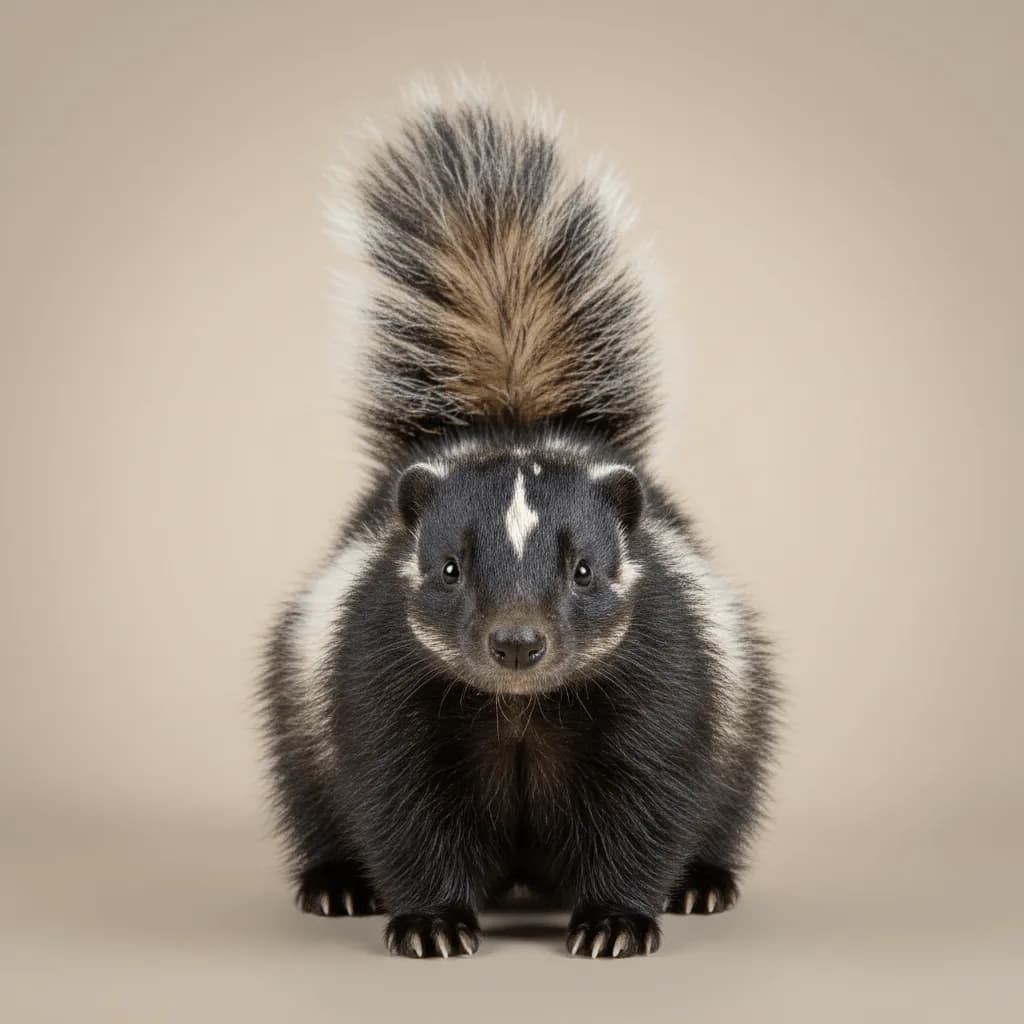
How is a spotted skunk different from a striped skunk?
Are spotted skunks endangered?
Can spotted skunks climb?
Need Help With Spotted skunk?
If you're seeing signs of spotted skunk in or around your home, professional treatment is the fastest way to stop the problem. Lotus Pest Control offers free inspections to identify the issue and recommend the right solution.
At a Glance
- Category
- Wildlife
- Scientific Name
- Spilogale putorius
- Size
- 180-340 mm body; 0.4-1.0 kg weight
- Color
- Black with irregular white spots and broken stripes; white spot on forehead
- Key Trait
- Much smaller than the striped skunk; irregular white spots and broken stripes instead of solid stripes; performs a dramatic handstand before spraying.
- Regions
- Southeast, Great Plains, Southwest, Midwest, Mountain West, Gulf Coast
- Threat Level
- Low
- Risk Types
- healthpetsnuisance
- Seasonal Activity
- MarAprMayJunJulAugSepOctNovDecJanFebnonelowmoderatehighpeak