
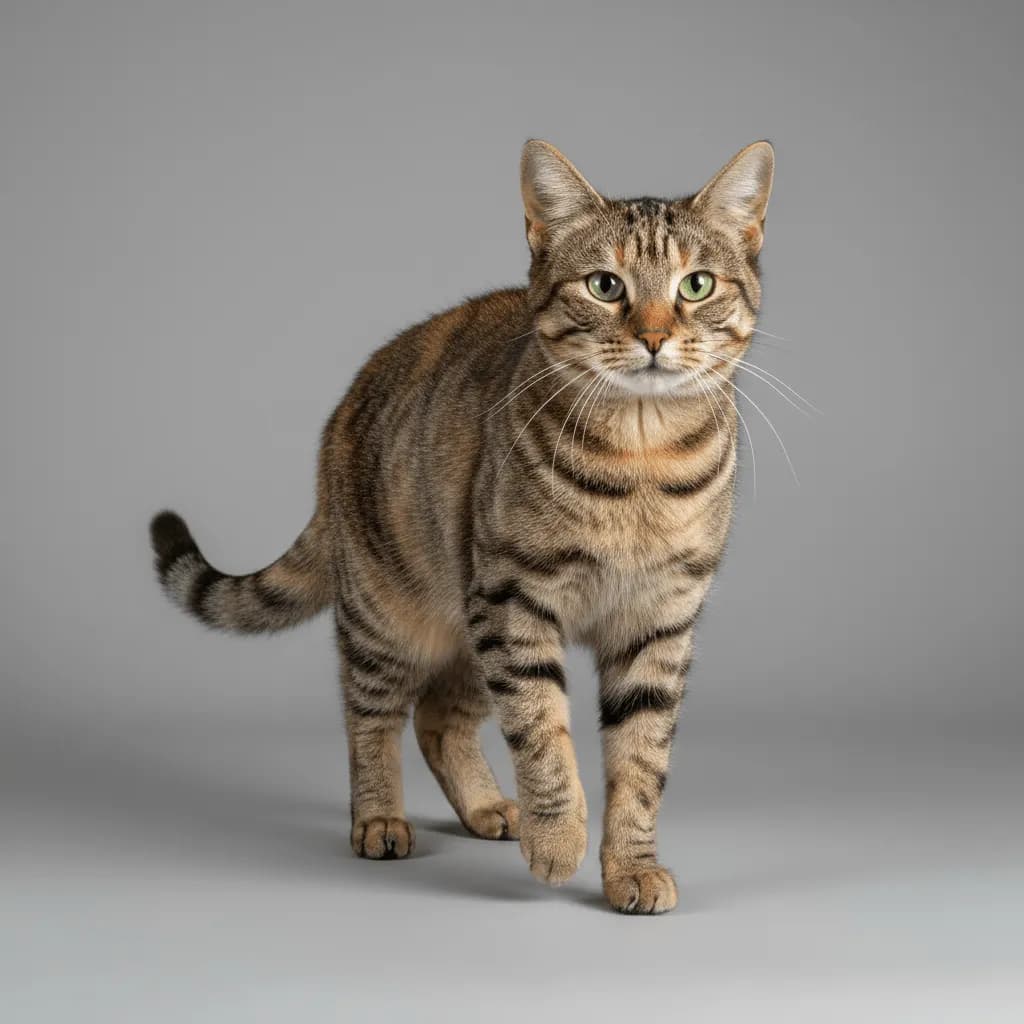
Feral Cat
Felis catus
Also known as: Stray Cat, Free-Roaming Cat, Community Cat
Feral cats are unowned, free-roaming domestic cats that live and reproduce outdoors. They form colonies near food sources and can reach high densities in urban and suburban areas. Feral cats are prolific hunters of birds and small wildlife, create sanitation issues through spraying and defecation, and can transmit diseases to domestic pets and, rarely, to humans.
Identification
Size
460-500 mm body; tail adds 250-300 mm; 2.5-5 kg weight
Color
Highly variable - tabby, black, white, orange, calico, or any domestic cat coloring
Key Trait
Indistinguishable from domestic cats by appearance; identified by feral behavior - avoids human contact, lives independently outdoors, often in colonies near food sources. Ear-tipped individuals have been spayed/neutered through TNR programs.
Behavior & Habitat
Primarily crepuscular and nocturnal. Lives in colonies of 2-20+ individuals centered around a food source. Highly territorial; males spray urine to mark territory. Reproduces rapidly - a single female can produce 2-3 litters of 4-6 kittens per year. Avoids direct human contact.
Habitat: Urban alleys, parks, abandoned buildings, under decks and porches, dumpster areas, and any location with a consistent food supply. Found in every habitat type where humans live.
Diet: Birds, rodents, lizards, insects, garbage, pet food left outdoors, and food provided by well-meaning feeders.
Signs of Infestation
- Strong urine odor (spraying) around the foundation, on porches, and near entry doors
- Cat feces in garden beds, sandboxes, and under porches
- Nighttime yowling, fighting sounds, and cats seen around dumpsters and outdoor feeding stations
Risks & Damage
Transmits toxoplasmosis (via feces), rabies, and cat scratch fever. Feces contaminate gardens and sandboxes.
Transmits feline leukemia (FeLV), feline immunodeficiency virus (FIV), and fleas to domestic cats through fights.
Spraying, yowling, fighting, defecating in gardens, and killing ornamental birds.
Prevention Tips
- 1.Never feed feral cats - feeding sustains and grows colonies
- 2.Remove outdoor pet food dishes before dark
- 3.Block access under decks, porches, and sheds with hardware cloth to eliminate denning sites
Why DIY Treatment Often Falls Short
Removing individual cats from a colony creates a vacuum quickly filled by neighboring cats or increased reproduction by remaining colony members. Without a comprehensive trap-neuter-return (TNR) program or total colony removal, feral cat populations are self-sustaining.
Professional Treatment
Professional animal management organizations implement TNR (trap-neuter-return) programs that stabilize and gradually reduce colony size. Exclusion barriers prevent denning under structures. In some cases, total colony removal and relocation to managed barn cat programs is appropriate.

Frequently Asked Questions
What is TNR?
Can feral cats be tamed?
Do feral cats really harm bird populations?
Need Help With Feral cat?
If you're seeing signs of feral cat in or around your home, professional treatment is the fastest way to stop the problem. Lotus Pest Control offers free inspections to identify the issue and recommend the right solution.
At a Glance
- Category
- Wildlife
- Scientific Name
- Felis catus
- Size
- 460-500 mm body; tail adds 250-300 mm; 2.5-5 kg weight
- Color
- Highly variable - tabby, black, white, orange, calico, or any domestic cat coloring
- Key Trait
- Indistinguishable from domestic cats by appearance; identified by feral behavior - avoids human contact, lives independently outdoors, often in colonies near food sources. Ear-tipped individuals have been spayed/neutered through TNR programs.
- Regions
- Southeast, Northeast, Midwest, Mid Atlantic, West Coast, Gulf Coast, Southwest, Pacific Northwest, Mountain West, Great Plains
- Threat Level
- Moderate
- Risk Types
- healthpetsnuisance
- Seasonal Activity
- MarAprMayJunJulAugSepOctNovDecJanFebnonelowmoderatehighpeak