
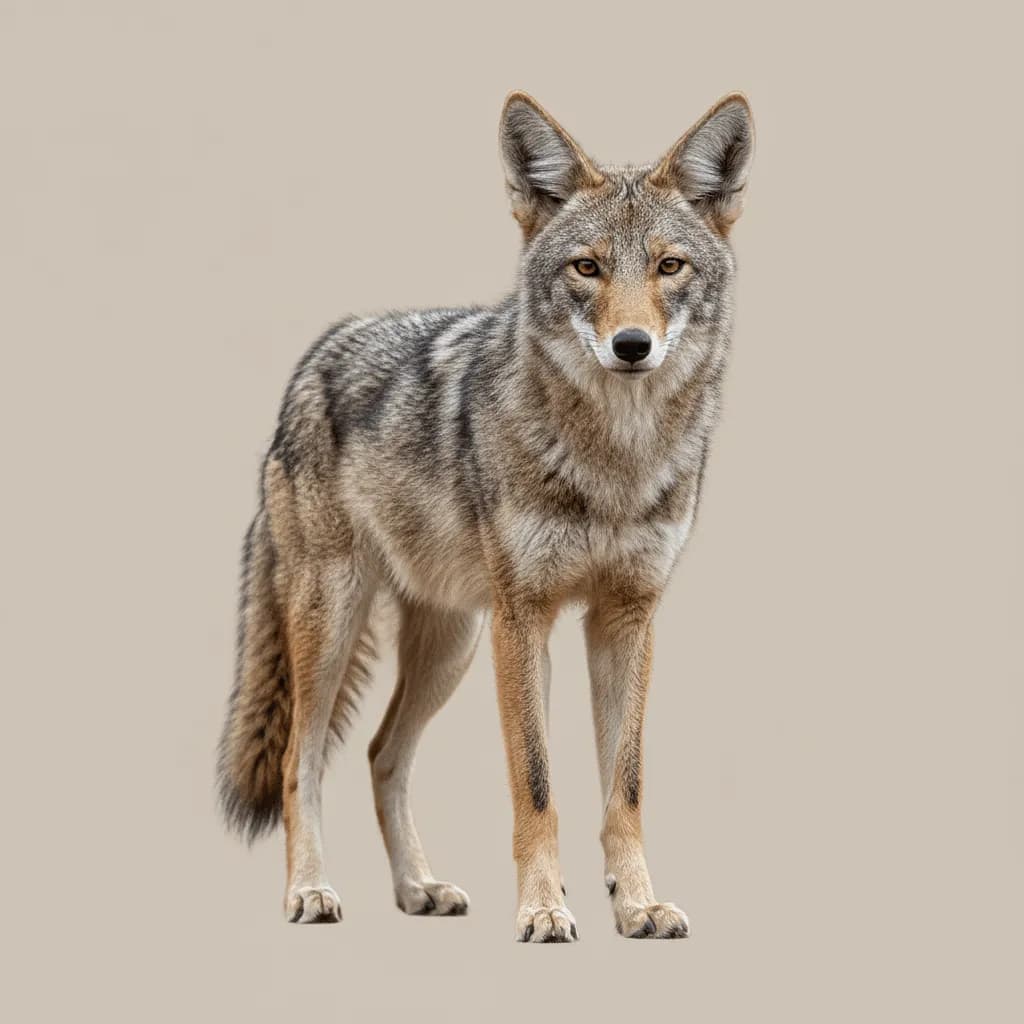
Coyote
Canis latrans
Also known as: Prairie Wolf, Brush Wolf, Song Dog
The Coyote is one of the most adaptable mammals in North America, thriving in urban, suburban, and rural environments from coast to coast. It is an increasing concern in suburban neighborhoods where it preys on small pets, scavenges garbage, and dens under decks and outbuildings. Coyotes rarely attack humans but can become bold and habituated in areas where they are not hazed.
Identification
Size
810-940 mm body; tail adds 300-400 mm; 8-20 kg weight
Color
Grizzled gray-brown with a lighter underside; rusty-orange legs, ears, and face; bushy, black-tipped tail carried low while running
Key Trait
Smaller and more slender than a wolf; pointed muzzle and large, erect ears; bushy tail carried low (not upright like a dog); distinct yipping and howling vocalizations.
Behavior & Habitat
Primarily crepuscular and nocturnal, though may be active any time of day. Highly adaptable and intelligent. Hunts small mammals, rabbits, and rodents. In suburban areas, scavenges garbage, pet food, and fallen fruit. Mates in January - March; pups born in spring.
Habitat: Prairies, forests, deserts, mountains, and increasingly suburban and urban environments. Dens in burrows, hollow logs, thickets, or under decks and sheds.
Diet: Rabbits, rodents, deer fawns, fruit, insects, garbage, pet food, and occasionally small pets (cats and small dogs).
Signs of Infestation
- Coyote scat on trails, driveways, and sidewalks - typically contains fur, bone fragments, and seeds
- Yipping, howling, and barking heard at night, particularly during January - March mating season
- Missing outdoor cats or small dogs; tracks showing a straight, narrow walking pattern unlike domestic dogs
Risks & Damage
Preys on outdoor cats and small dogs. Can injure or kill pets left outdoors unsupervised, especially at dawn, dusk, and nighttime.
Carries rabies, canine distemper, mange, and parasites including tapeworms transmissible to pets and, rarely, humans.
Scavenges garbage, raids fruit trees, and dens near homes. Vocalizations disturb sleep.
Prevention Tips
- 1.Never leave small pets outdoors unsupervised, especially at dawn, dusk, and nighttime
- 2.Remove outdoor food sources - pet food, fallen fruit, and unsecured garbage
- 3.Practice hazing - make loud noises, wave arms, and act aggressively when coyotes are seen near the home
Why DIY Treatment Often Falls Short
Coyotes are highly intelligent and adaptable. They habituate to passive deterrents like lights, sprinklers, and ultrasonic devices within days. Lethal removal often triggers compensatory reproduction, and neighboring coyotes quickly fill vacated territories.
Professional Treatment
Wildlife professionals implement integrated coyote management including den removal, hazing protocols, and exclusion fencing for vulnerable areas. Community-level management programs that combine hazing, attractant removal, and selective removal of bold individuals are most effective.
Related Pests

Frequently Asked Questions
Will a coyote attack my child?
Does removing coyotes solve the problem?
Why are coyotes in my suburban neighborhood?
Need Help With Coyote?
If you're seeing signs of coyote in or around your home, professional treatment is the fastest way to stop the problem. Lotus Pest Control offers free inspections to identify the issue and recommend the right solution.
At a Glance
- Category
- Wildlife
- Scientific Name
- Canis latrans
- Size
- 810-940 mm body; tail adds 300-400 mm; 8-20 kg weight
- Color
- Grizzled gray-brown with a lighter underside; rusty-orange legs, ears, and face; bushy, black-tipped tail carried low while running
- Key Trait
- Smaller and more slender than a wolf; pointed muzzle and large, erect ears; bushy tail carried low (not upright like a dog); distinct yipping and howling vocalizations.
- Regions
- Southwest, West Coast, Great Plains, Mountain West, Southeast, Midwest, Northeast, Pacific Northwest, Mid Atlantic, Gulf Coast
- Threat Level
- Moderate
- Risk Types
- petshealthnuisance
- Seasonal Activity
- MarAprMayJunJulAugSepOctNovDecJanFebnonelowmoderatehighpeak