
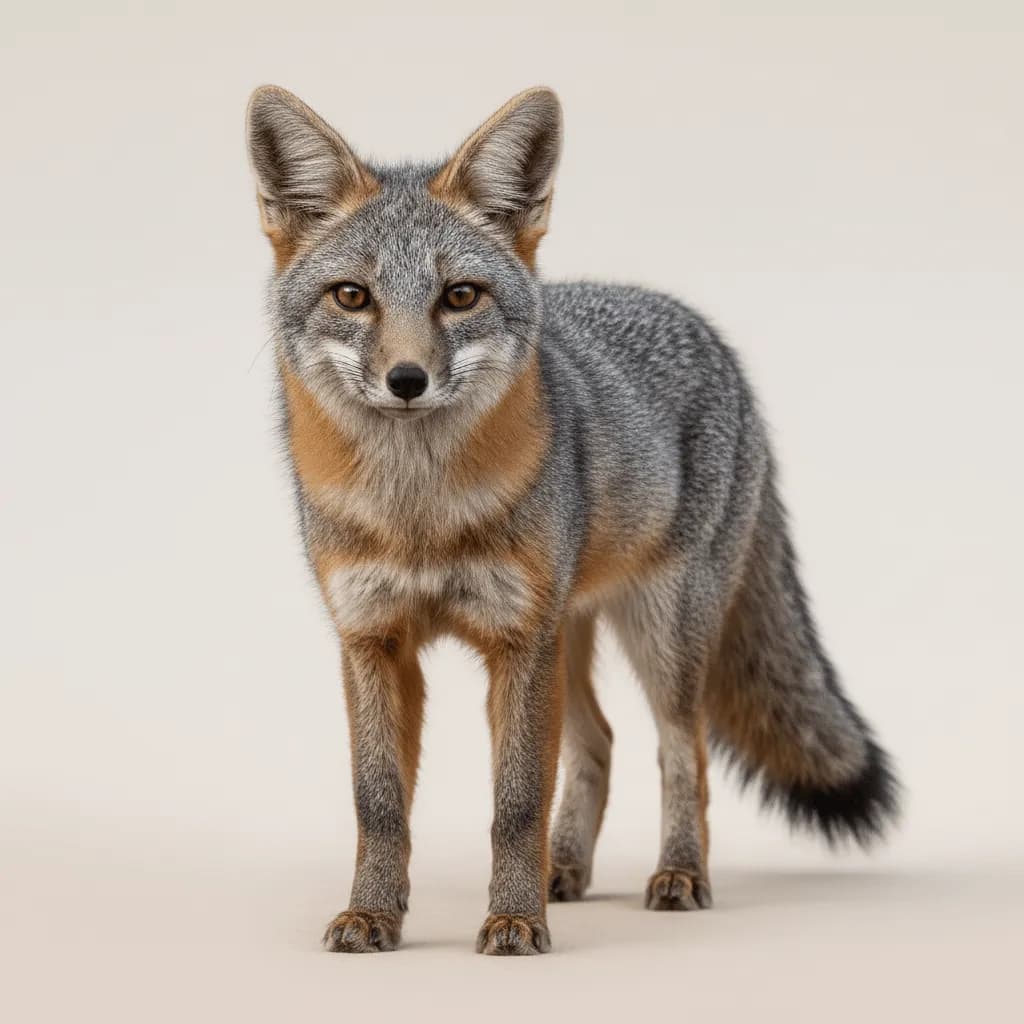
Gray Fox
Urocyon cinereoargenteus
Also known as: Grey Fox, Tree Fox
The Gray Fox is a native North American canid that is uniquely capable of climbing trees, thanks to rotating forearms and strong, hooked claws. It is more secretive than the red fox and tends to stay closer to wooded areas. Gray foxes den in hollow trees, rock crevices, and under structures, where they raise 3-5 kits in spring.
Identification
Size
480-690 mm body; tail adds 270-440 mm; 3-6 kg weight
Color
Grizzled gray with rusty-orange sides and neck; black stripe along the top of the tail; black-tipped tail (no white tip)
Key Trait
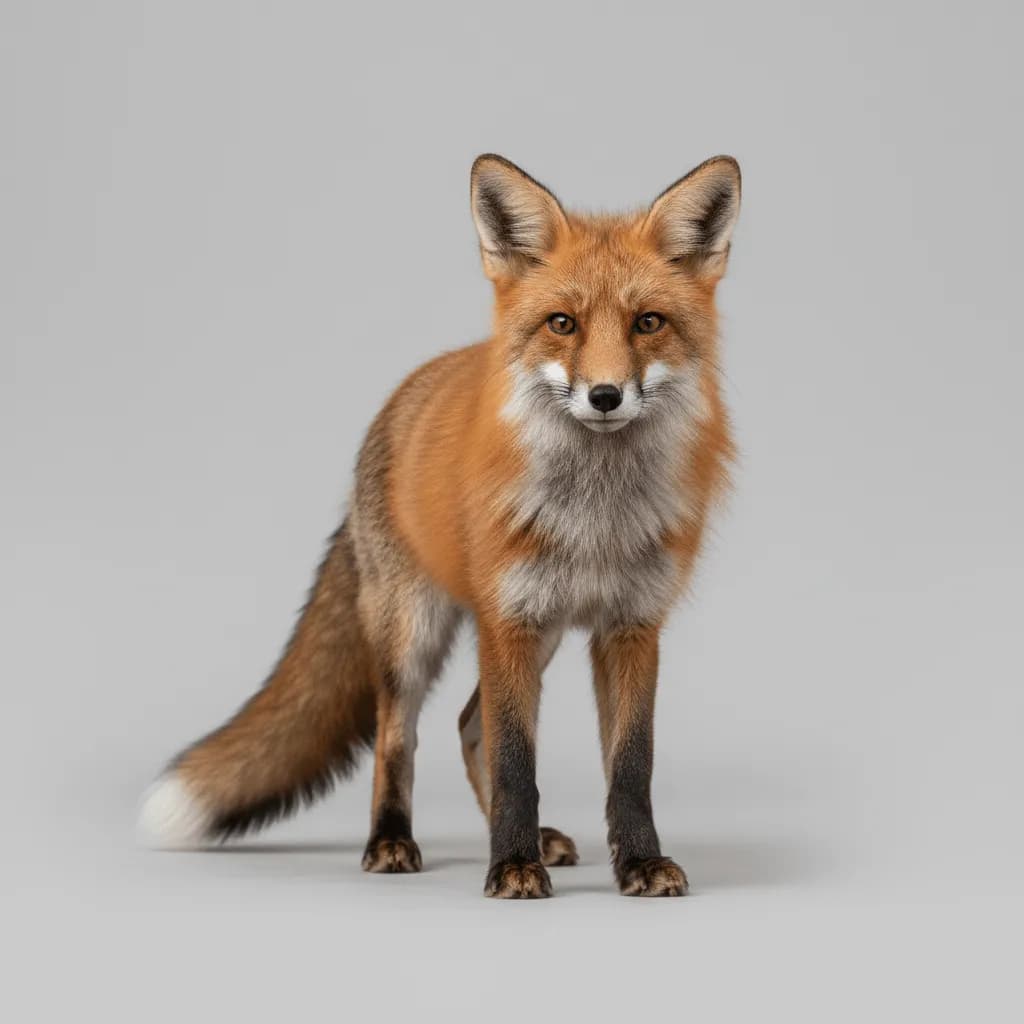
Gray, pepper-and-salt fur with orange-rusty flanks; black-tipped tail (unlike the red fox's white-tipped tail); the only canid that regularly climbs trees.
Behavior & Habitat
Primarily nocturnal and more secretive than the red fox. Regularly climbs trees to escape predators, forage, and rest. Tends to stay closer to wooded cover. Less likely to be seen in open suburban yards than the red fox. Dens in hollow trees, rock outcrops, and under decks.
Habitat: Deciduous and mixed forests, brushy areas, and wooded suburban neighborhoods. Avoids open areas preferred by red foxes and coyotes.
Diet: Cottontail rabbits, rodents, birds, insects, fruit (especially persimmons, grapes, and berries), corn, and occasional garbage.
Signs of Infestation
- Fox-like scat with berry seeds and insect parts in wooded areas near the home
- Scratching and movement sounds under decks or in crawl spaces, especially in spring
- Sightings of a gray, cat-sized canid climbing trees or along tree lines at dusk
Risks & Damage
Rabies vector, though less frequently than red foxes. Can carry canine distemper and leptospirosis.
May prey on poultry and occasionally conflict with outdoor cats.
Dens under decks and sheds; musky odor from den sites.
Prevention Tips
- 1.Seal access points under decks, porches, and sheds with heavy hardware cloth
- 2.Keep poultry secured in predator-proof housing with enclosed runs
- 3.Remove dense brush and low-hanging branches near the home that provide cover
Why DIY Treatment Often Falls Short
Gray foxes are shy and secretive, making them difficult to detect until a den with kits is well established. Their tree-climbing ability allows them to access elevated entry points that homeowners do not consider. Timing exclusion around the kitting season is critical.
Professional Treatment
Wildlife professionals identify den sites through tracking and camera surveys. Exclusion is timed for after the kitting season. Entry points are sealed with heavy-gauge materials, and den sites are cleaned and deodorized.
Related Pests

Frequently Asked Questions
Can gray foxes really climb trees?
How do I tell a gray fox from a red fox?
Are gray foxes aggressive?
Need Help With Gray fox?
If you're seeing signs of gray fox in or around your home, professional treatment is the fastest way to stop the problem. Lotus Pest Control offers free inspections to identify the issue and recommend the right solution.
At a Glance
- Category
- Wildlife
- Scientific Name
- Urocyon cinereoargenteus
- Size
- 480-690 mm body; tail adds 270-440 mm; 3-6 kg weight
- Color
- Grizzled gray with rusty-orange sides and neck; black stripe along the top of the tail; black-tipped tail (no white tip)
- Key Trait
- Gray, pepper-and-salt fur with orange-rusty flanks; black-tipped tail (unlike the red fox's white-tipped tail); the only canid that regularly climbs trees.
- Regions
- Southeast, Southwest, Mid Atlantic, Northeast, Midwest, Gulf Coast, West Coast, Mountain West, Great Plains
- Threat Level
- Low
- Risk Types
- healthpetsnuisance
- Seasonal Activity
- MarAprMayJunJulAugSepOctNovDecJanFebnonelowmoderatehighpeak