
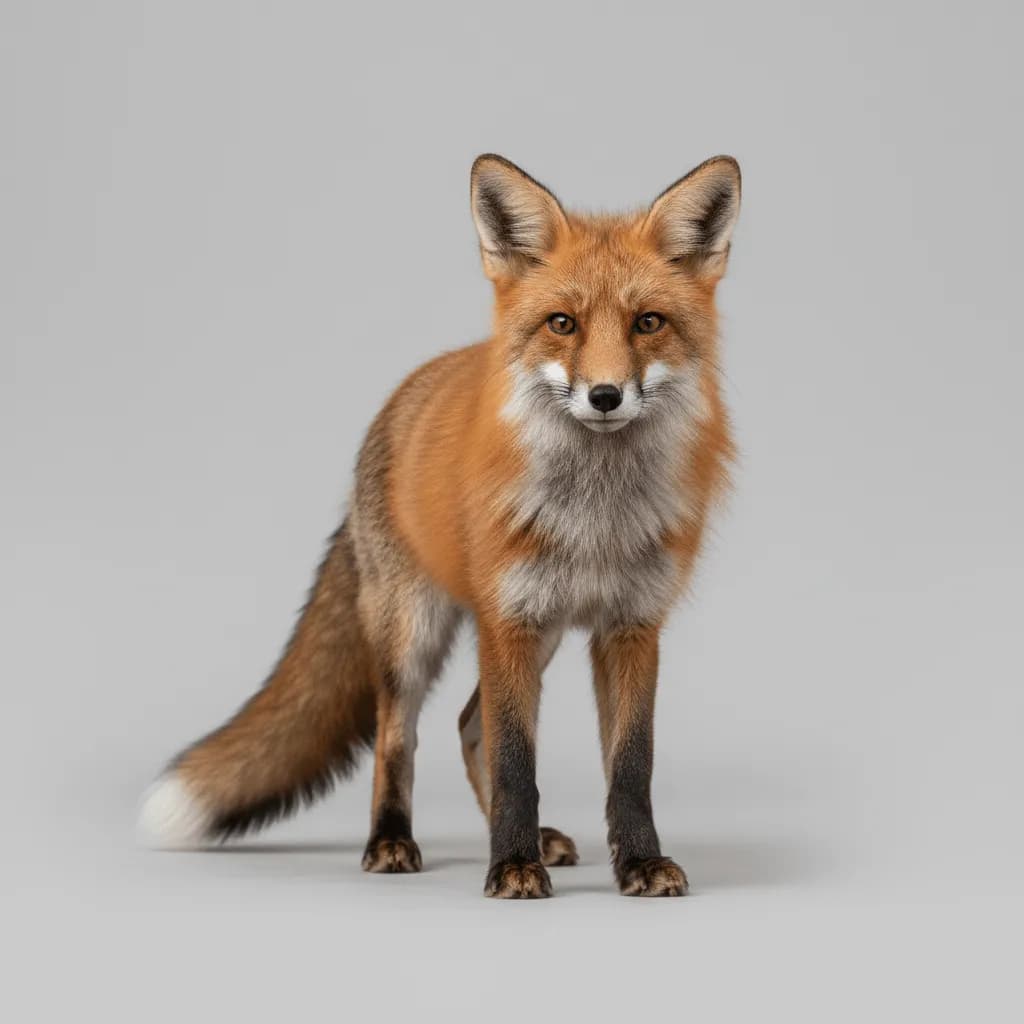
Red Fox
Vulpes vulpes
Also known as: Common Fox
The Red Fox is the most widely distributed wild carnivore on Earth and is increasingly common in suburban and urban environments. It dens under decks, sheds, and porches to raise kits in spring. While generally shy and non-aggressive, red foxes prey on poultry, scavenge garbage, and are a significant vector for rabies and mange.
Identification
Size
450-900 mm body; tail adds 300-550 mm; 3-7 kg weight
Color
Orange-red with black legs and ears; white-tipped, bushy tail; white chin and chest
Key Trait
Bright orange-red fur with a distinctive white-tipped bushy tail; black 'stockings' on the legs; slender build with a narrow muzzle; cat-like eyes with vertical pupils.
Behavior & Habitat
Primarily crepuscular and nocturnal. Solitary hunter. Dens underground, often enlarging burrows dug by other animals. In spring, vixens use dens under structures to raise 4-6 kits. Marks territory with a distinctive musky scent. Adapts well to human environments.
Habitat: Forest edges, farmland, meadows, suburban neighborhoods, and urban parks. Dens under decks, porches, sheds, and in abandoned burrows.
Diet: Rodents, rabbits, birds, eggs, insects, fruit, garbage, and pet food. Surplus kills are cached for later consumption.
Signs of Infestation
- Strong, musky odor around den entrances under decks or sheds, especially in spring
- Scat containing fur, feathers, and berry seeds left on prominent surfaces (rocks, tree stumps, sidewalks)
- Partially eaten prey remains (feathers, bones) scattered near the den site
Risks & Damage
Major rabies vector. Carries sarcoptic mange transmissible to domestic dogs.
Preys on chickens, ducks, and small pets. Mange mites from foxes can infest domestic dogs.
Musky odor from dens under structures; nocturnal vocalizations (barking and screaming) during mating season.
Prevention Tips
- 1.Seal openings under decks, porches, and sheds with heavy hardware cloth, buried at least 30 cm
- 2.Secure poultry coops with predator-proof fencing and locking doors
- 3.Remove food attractants - pet food, fallen fruit, and accessible garbage
Why DIY Treatment Often Falls Short
Foxes are wary and difficult to trap without experience. Attempting to exclude a vixen with kits still inside the den causes distress and may prompt her to move kits into less accessible areas of the structure. Repellents and deterrents are largely ineffective.
Professional Treatment
Licensed wildlife professionals time exclusion for after kits are mobile (typically late summer). One-way exclusion doors and heavy-gauge barriers prevent re-entry. Den sites are sanitized to remove odor cues that attract future foxes.
Related Pests
Frequently Asked Questions
Are red foxes dangerous to people?
Can my dog get mange from a fox?
When do foxes have babies?
Need Help With Red fox?
If you're seeing signs of red fox in or around your home, professional treatment is the fastest way to stop the problem. Lotus Pest Control offers free inspections to identify the issue and recommend the right solution.
At a Glance
- Category
- Wildlife
- Scientific Name
- Vulpes vulpes
- Size
- 450-900 mm body; tail adds 300-550 mm; 3-7 kg weight
- Color
- Orange-red with black legs and ears; white-tipped, bushy tail; white chin and chest
- Key Trait
- Bright orange-red fur with a distinctive white-tipped bushy tail; black 'stockings' on the legs; slender build with a narrow muzzle; cat-like eyes with vertical pupils.
- Regions
- Northeast, Midwest, Mid Atlantic, Great Plains, Southeast, Mountain West, Pacific Northwest, West Coast, Southwest, Gulf Coast
- Threat Level
- Low
- Risk Types
- healthpetsnuisance
- Seasonal Activity
- MarAprMayJunJulAugSepOctNovDecJanFebnonelowmoderatehighpeak