
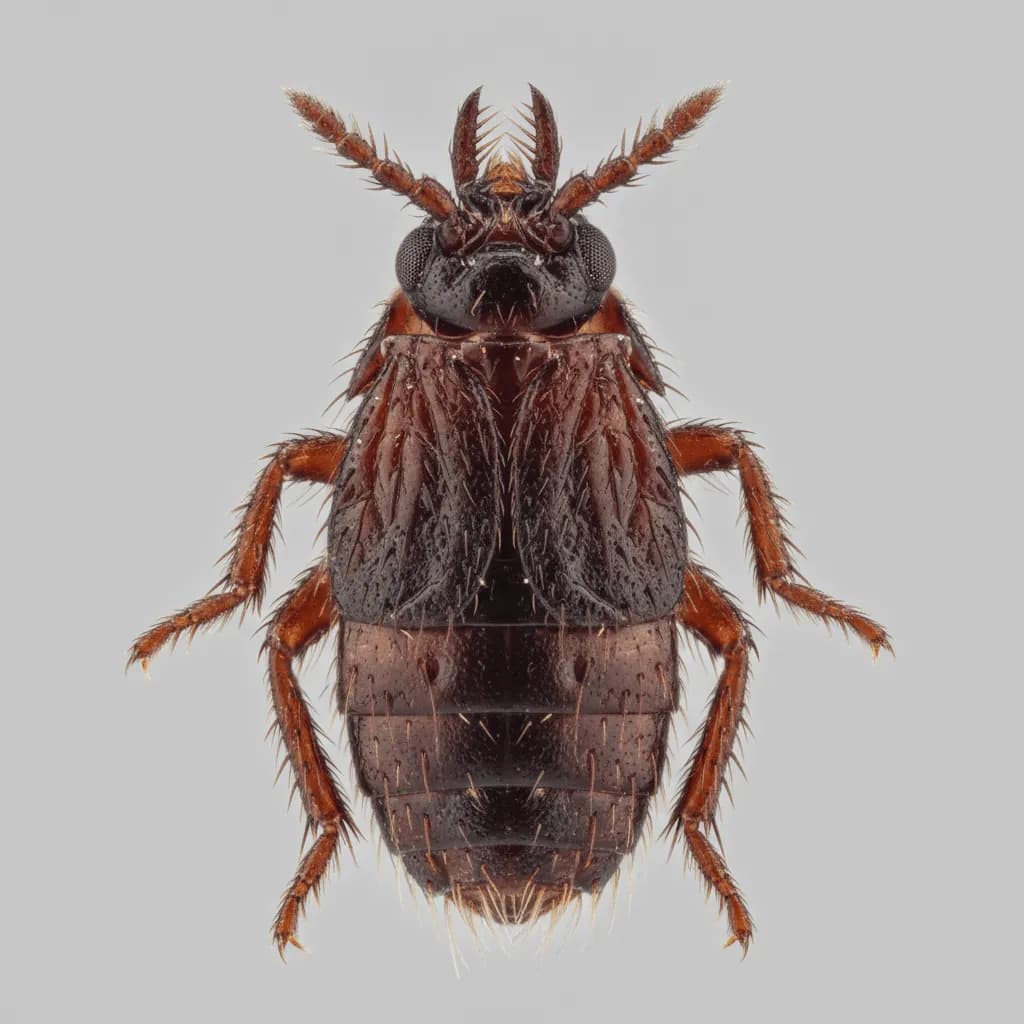
Dog Flea
Ctenocephalides canis
Also known as: European Dog Flea
The Dog Flea is closely related to the cat flea and was historically considered the primary flea of domestic dogs. In practice, it is far less common than the cat flea in North America but remains prevalent in parts of Europe. It transmits the double-pored tapeworm to dogs and occasionally humans.
Identification
Size
1.5-3.2 mm
Color
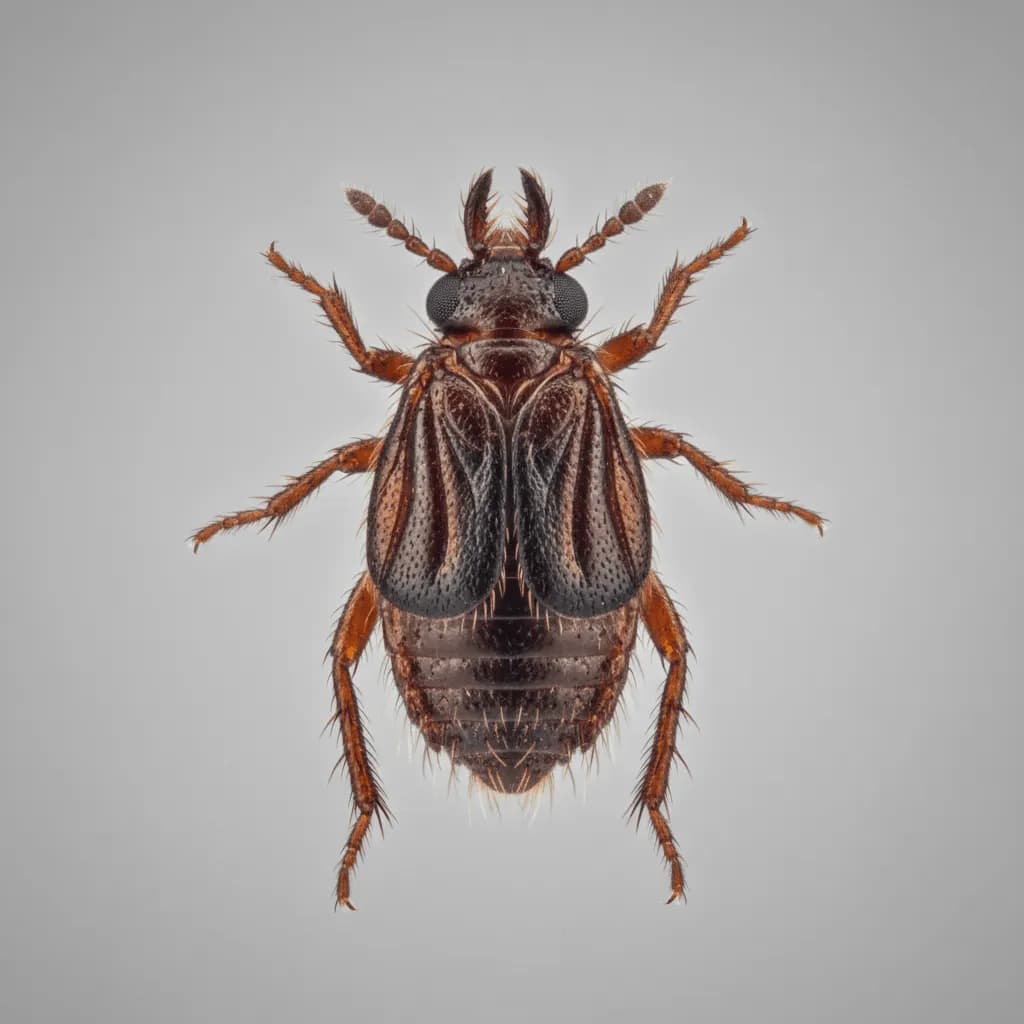
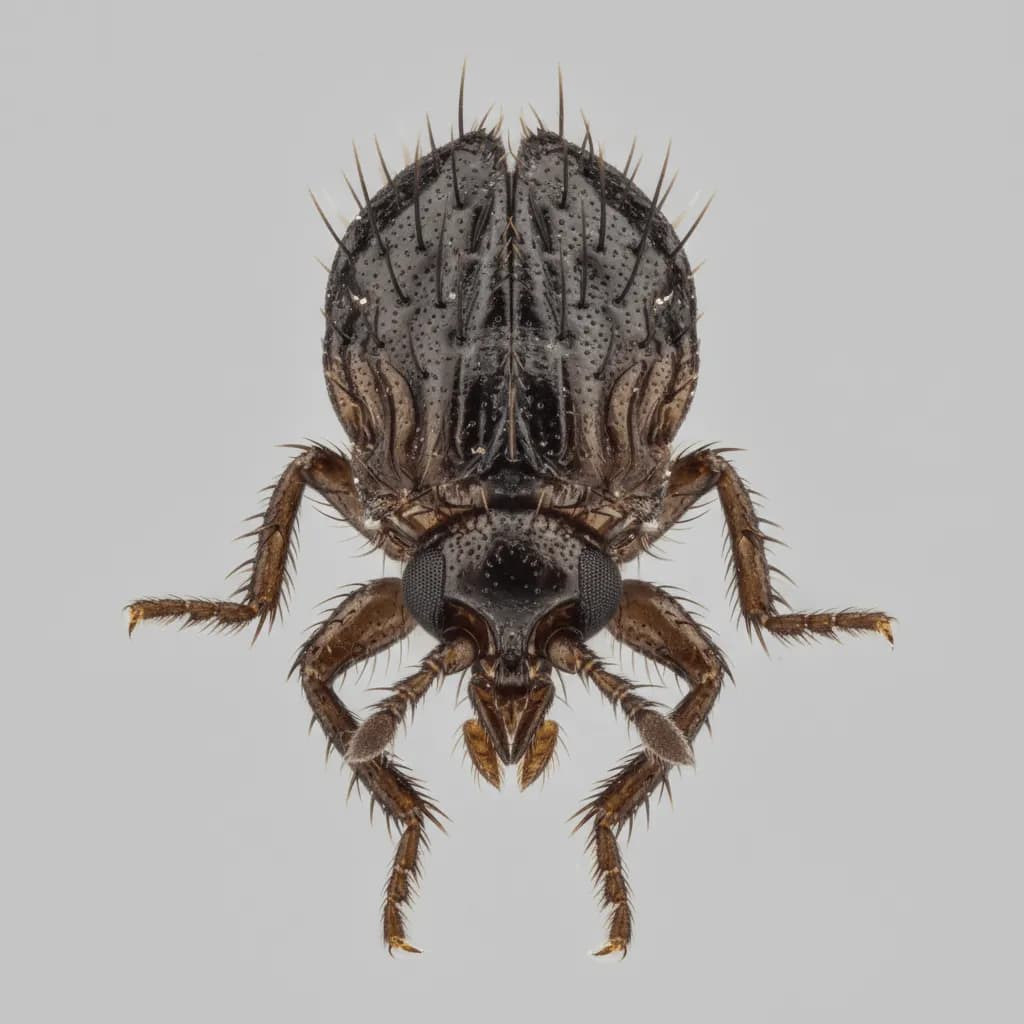
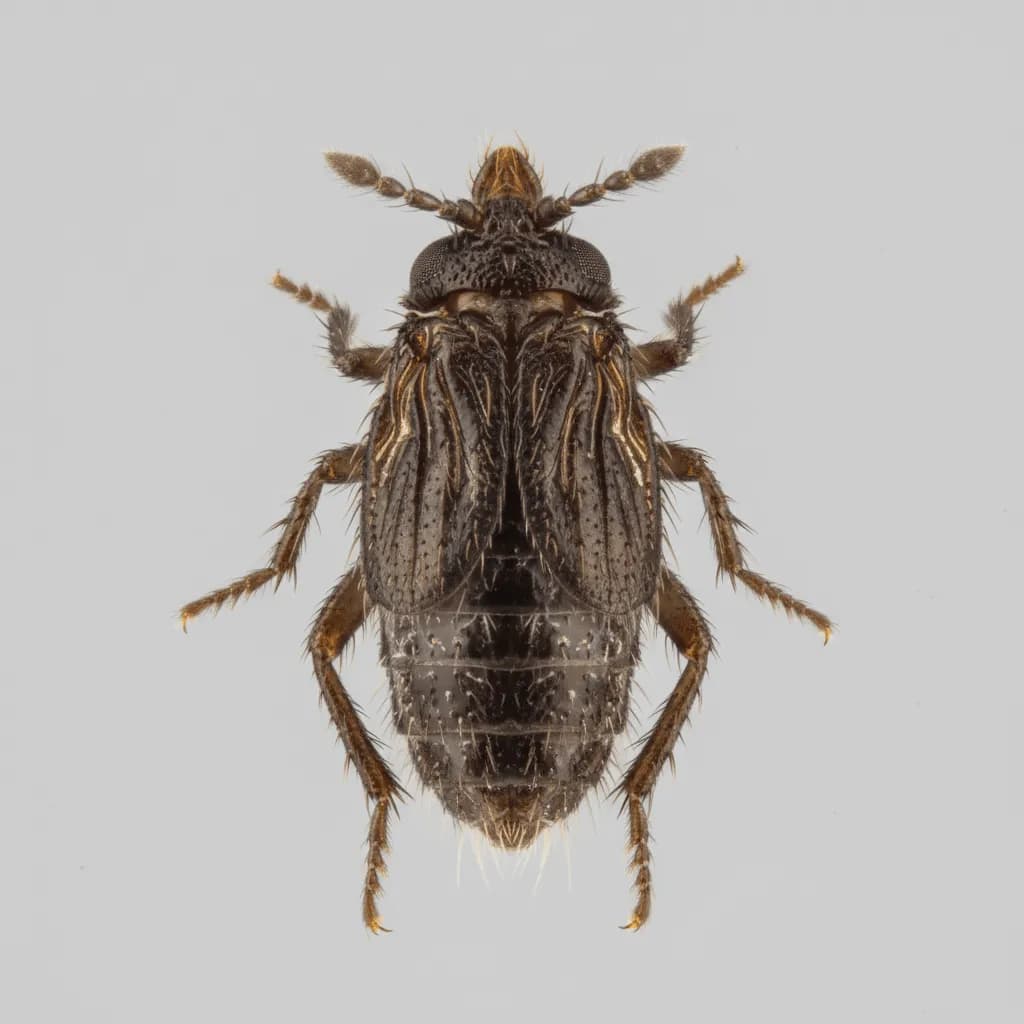
Dark brown, laterally compressed body
Key Trait
Very similar to the cat flea but with a more rounded head and shorter first spine on the genal comb; less common than C. felis in North America.
Behavior & Habitat
Adults feed on blood and can survive several months without a meal under cool conditions. Eggs are laid on the host and drop into the environment. Larvae feed on organic debris and adult flea feces in carpets and bedding.
Habitat: Dog kennels, pet bedding, carpeted floors, and outdoor areas frequented by dogs. Prefers slightly cooler and more humid environments than the cat flea.
Diet: Blood from dogs, cats, humans, and other mammals.
Signs of Infestation
- Dogs scratching, biting, and chewing at their fur persistently
- Flea dirt visible as dark specks in pet bedding and resting areas
- Adult fleas observed jumping on furniture or human clothing
Risks & Damage
Causes intense itching, flea allergy dermatitis, and transmits Dipylidium caninum tapeworm to dogs.
Bites humans and can transmit tapeworms if accidentally ingested.
Prevention Tips
- 1.Use veterinarian-recommended flea prevention on all dogs year-round
- 2.Regularly wash and dry dog bedding on high heat
- 3.Keep lawns mowed short and remove leaf litter from shaded areas
Why DIY Treatment Often Falls Short
Flea eggs and pupae embedded in carpets and crevices survive surface treatments. Without targeting all life stages simultaneously, populations quickly rebound.
Professional Treatment
Professionals apply targeted adulticides and IGRs to infested indoor areas and outdoor harborage zones. A multi-visit treatment plan ensures emerging pupae are eliminated over the full life cycle.
Frequently Asked Questions
How do I tell a dog flea from a cat flea?
Can dog fleas infest my home without pets?
Are dog flea bites dangerous to humans?
Need Help With Dog flea?
If you're seeing signs of dog flea in or around your home, professional treatment is the fastest way to stop the problem. Lotus Pest Control offers free inspections to identify the issue and recommend the right solution.
At a Glance
- Category
- Fleas And Ticks
- Scientific Name
- Ctenocephalides canis
- Size
- 1.5-3.2 mm
- Color
- Dark brown, laterally compressed body
- Key Trait
- Very similar to the cat flea but with a more rounded head and shorter first spine on the genal comb; less common than C. felis in North America.
- Regions
- Southeast, Gulf Coast, Northeast, Midwest, Mid Atlantic, West Coast
- Threat Level
- Moderate
- Risk Types
- petshealth
- Seasonal Activity
- MarAprMayJunJulAugSepOctNovDecJanFebnonelowmoderatehighpeak