
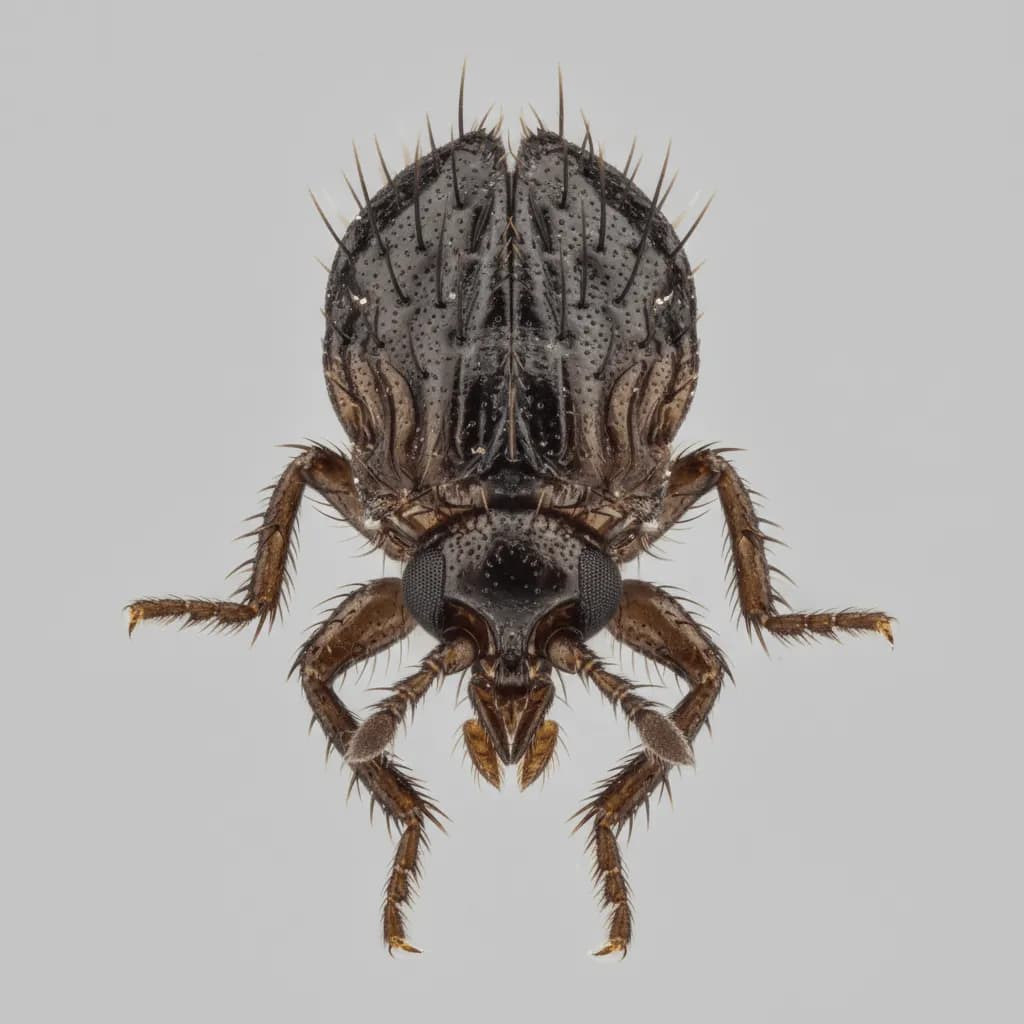
Human Flea
Pulex irritans
Also known as: House Flea
The Human Flea was once the dominant flea species found on people and is historically associated with plague transmission alongside the oriental rat flea. Improved sanitation has made it uncommon in developed countries, but it persists in rural areas and on pig farms. It feeds on humans, pigs, and a variety of other mammals.
Identification
Size
1.5-4 mm
Color
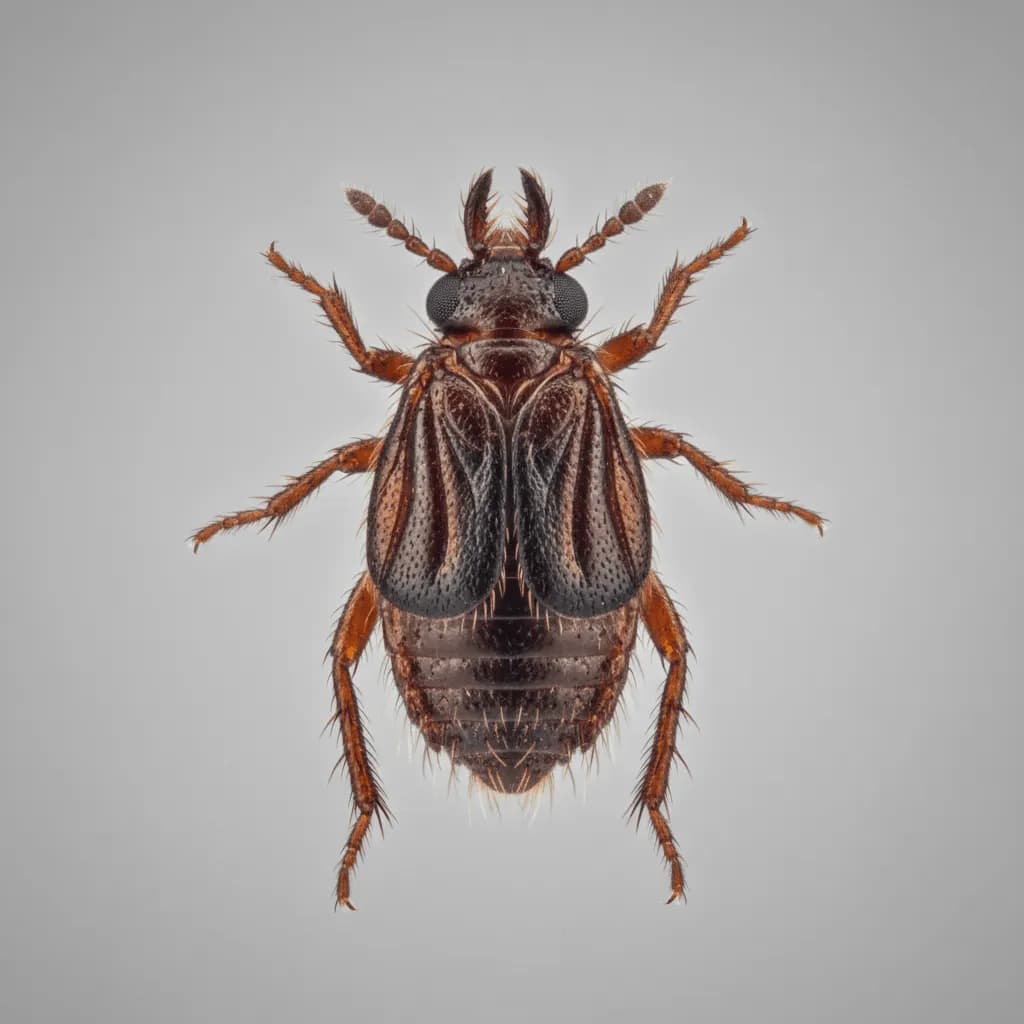
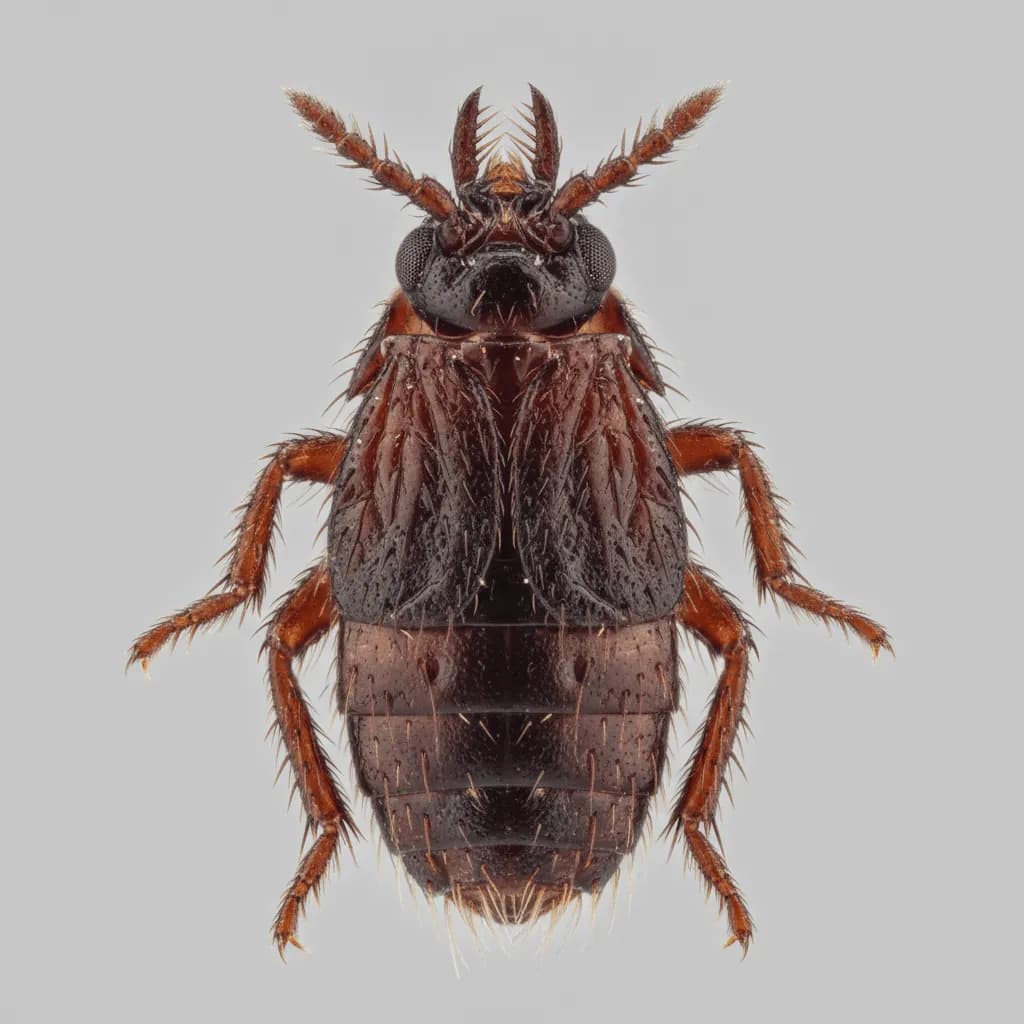
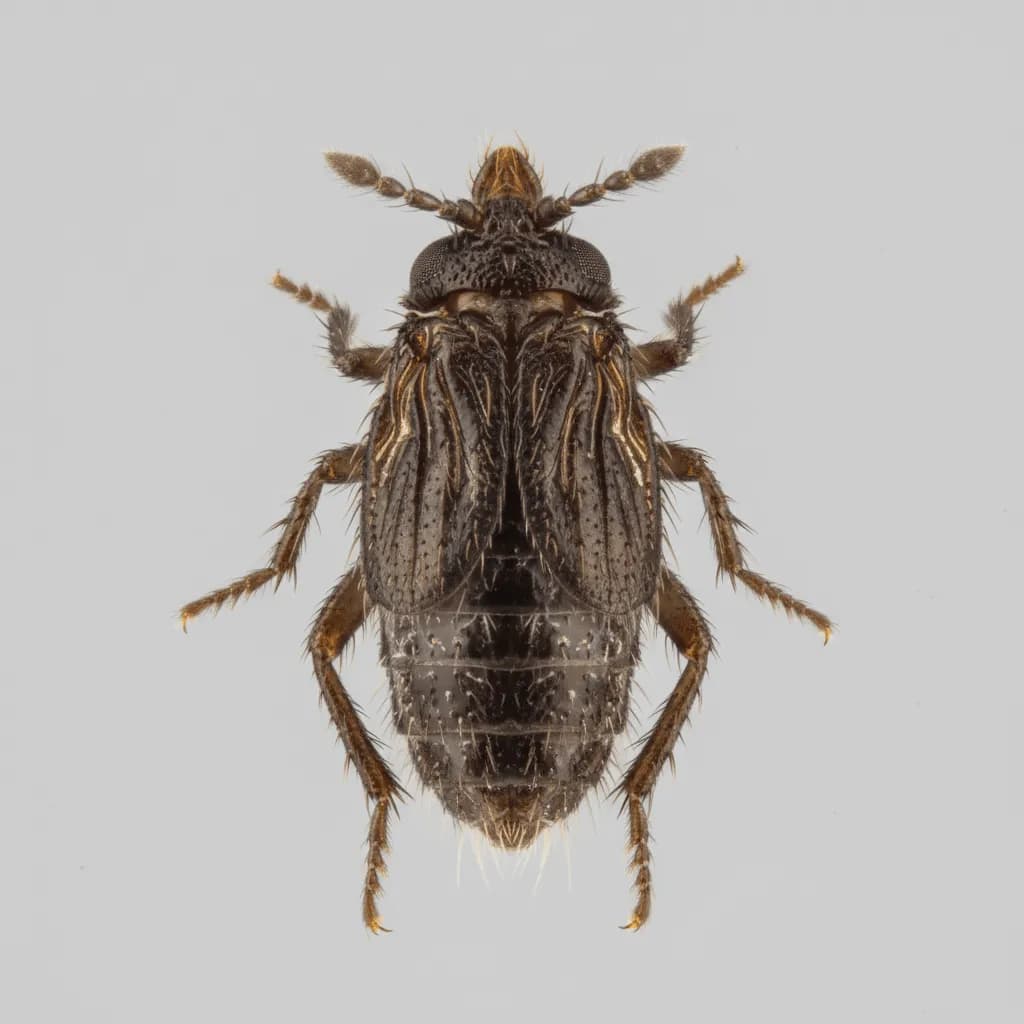
Dark brown to black, wingless and laterally compressed
Key Trait
Lacks both genal and pronotal combs (rows of spines on the head), distinguishing it from cat and dog fleas; historically the primary flea parasite of humans.
Behavior & Habitat
Adults are excellent jumpers and actively seek warm-blooded hosts. Unlike cat and dog fleas, human fleas lack host-specific combs, allowing them to move easily through human body hair. Females lay several hundred eggs over their lifetime in bedding, floor cracks, and clothing.
Habitat: Homes with poor sanitation, pig farms, rural dwellings, and areas where humans sleep on the ground. Historically common in crowded, unsanitary living conditions.
Diet: Blood from humans, pigs, dogs, badgers, and other mammals.
Signs of Infestation
- Clusters of itchy red bites on the body, especially the waist and legs
- Adult fleas observed jumping in bedding or on clothing
- Dark fecal specks in mattress seams and bedding folds
Risks & Damage
Bites cause significant irritation and allergic reactions. Historically implicated in transmission of plague (Yersinia pestis) and murine typhus.
Prevention Tips
- 1.Maintain clean bedding and launder sheets in hot water regularly
- 2.Vacuum floors, rugs, and mattresses thoroughly and frequently
- 3.Seal cracks in flooring and walls to eliminate harborage sites
Why DIY Treatment Often Falls Short
Human fleas hide in floor cracks, mattress seams, and wall voids that surface cleaning and sprays cannot penetrate. Without treating all harborage sites, survivors repopulate quickly.
Professional Treatment
Professionals conduct a thorough inspection to identify harborage sites, apply residual insecticides to cracks and crevices, and use IGRs to prevent egg and larval development. Follow-up treatments ensure complete elimination.
Frequently Asked Questions
Are human fleas still common today?
Can human fleas spread plague?
How do I know if I have human fleas versus cat fleas?
Need Help With Human flea?
If you're seeing signs of human flea in or around your home, professional treatment is the fastest way to stop the problem. Lotus Pest Control offers free inspections to identify the issue and recommend the right solution.
At a Glance
- Category
- Fleas And Ticks
- Scientific Name
- Pulex irritans
- Size
- 1.5-4 mm
- Color
- Dark brown to black, wingless and laterally compressed
- Key Trait
- Lacks both genal and pronotal combs (rows of spines on the head), distinguishing it from cat and dog fleas; historically the primary flea parasite of humans.
- Regions
- Southeast, Great Plains, Southwest, Gulf Coast
- Threat Level
- Low
- Risk Types
- health
- Seasonal Activity
- MarAprMayJunJulAugSepOctNovDecJanFebnonelowmoderatehighpeak