
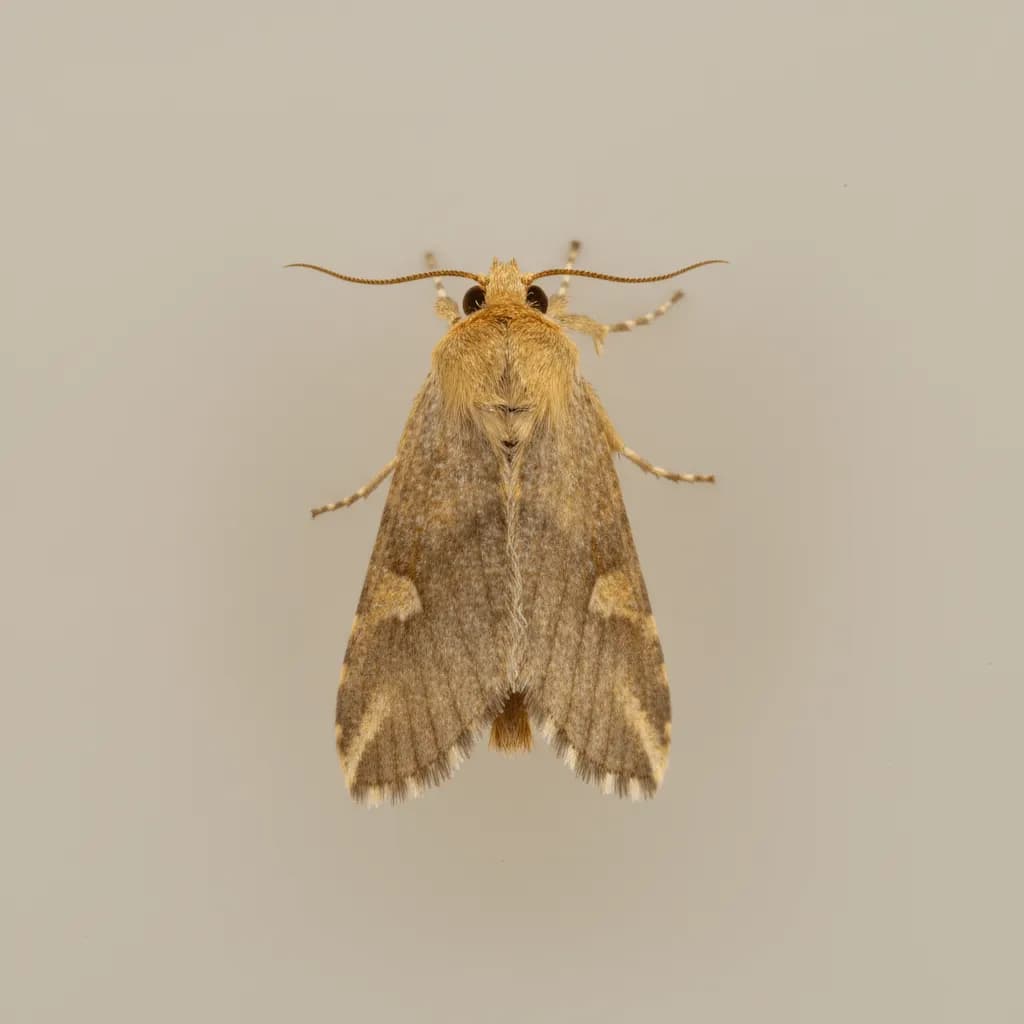
Angoumois Grain Moth
Sitotroga cerealella
Also known as: Grain Moth
The Angoumois Grain Moth is a significant pest of whole stored grain, particularly corn, wheat, and barley. Unlike most pantry moths whose larvae feed on the surface of food products, Angoumois grain moth larvae develop entirely inside individual grain kernels, making detection difficult until adults emerge. It is named after the Angoumois province of France where it caused devastating grain losses.
Identification
Size
6-9 mm wingspan
Color
Pale yellowish-brown to buff-colored wings with a distinctive pointed fringe on the trailing edge of the hindwings
Key Trait
Smaller than Indian meal moth; uniformly pale buff-colored wings with no banding; hindwings have a distinctive pointed finger-like projection; larvae develop entirely inside individual grain kernels.
Behavior & Habitat
Females lay eggs on or near whole grain kernels. Larvae bore into individual kernels and develop entirely inside, hollowing out the grain. Adults emerge from small round exit holes. Adults are active fliers attracted to lights. Can infest grain in the field before harvest.
Habitat: Whole grain storage bins, corn cribs, barns, pantries with whole grain or ornamental corn, and grain in the field. Primarily a pest of whole grain kernels rather than processed grain products.
Diet: Larvae feed inside whole grain kernels of corn, wheat, barley, rice, and other whole grains. Does not typically infest ground or processed grain products.
Signs of Infestation
- Small pale moths flying near stored grain or around lights in the evening
- Whole grain kernels with small round exit holes where adults emerged
- Grain that feels lighter than expected and crumbles easily when pressed
Risks & Damage
Destroys whole stored grain from the inside; large infestations can render entire grain stores unusable and spread to fresh grain.
Prevention Tips
- 1.Inspect whole grain products before purchase and storage, looking for small holes in kernels
- 2.Store whole grain in airtight containers and use within a reasonable timeframe
- 3.Freeze whole grain products for at least four days before long-term storage to kill any eggs or larvae
Why DIY Treatment Often Falls Short
Larvae develop hidden inside individual grain kernels, completely protected from surface sprays and contact treatments. By the time adults are seen flying, the infestation is already well established.
Professional Treatment
Professionals identify infested grain sources and recommend disposal. Pheromone traps monitor for adults. Commercial grain storage may require fumigation. Residual treatments to storage areas prevent reinfestation.
Related Pests
Frequently Asked Questions
How is it different from the Indian meal moth?
Can it infest my decorative corn?
Why did my stored grain have holes?
Need Help With Angoumois grain moth?
If you're seeing signs of angoumois grain moth in or around your home, professional treatment is the fastest way to stop the problem. Lotus Pest Control offers free inspections to identify the issue and recommend the right solution.
At a Glance
- Category
- Pantry Pests
- Scientific Name
- Sitotroga cerealella
- Size
- 6-9 mm wingspan
- Color
- Pale yellowish-brown to buff-colored wings with a distinctive pointed fringe on the trailing edge of the hindwings
- Key Trait
- Smaller than Indian meal moth; uniformly pale buff-colored wings with no banding; hindwings have a distinctive pointed finger-like projection; larvae develop entirely inside individual grain kernels.
- Regions
- Southeast, Midwest, Great Plains, Gulf Coast, Mid Atlantic
- Threat Level
- Low
- Risk Types
- foodagricultural
- Seasonal Activity
- MarAprMayJunJulAugSepOctNovDecJanFebnonelowmoderatehighpeak