
Star-Nosed Mole
Condylura cristata
Also known as: Starnose Mole
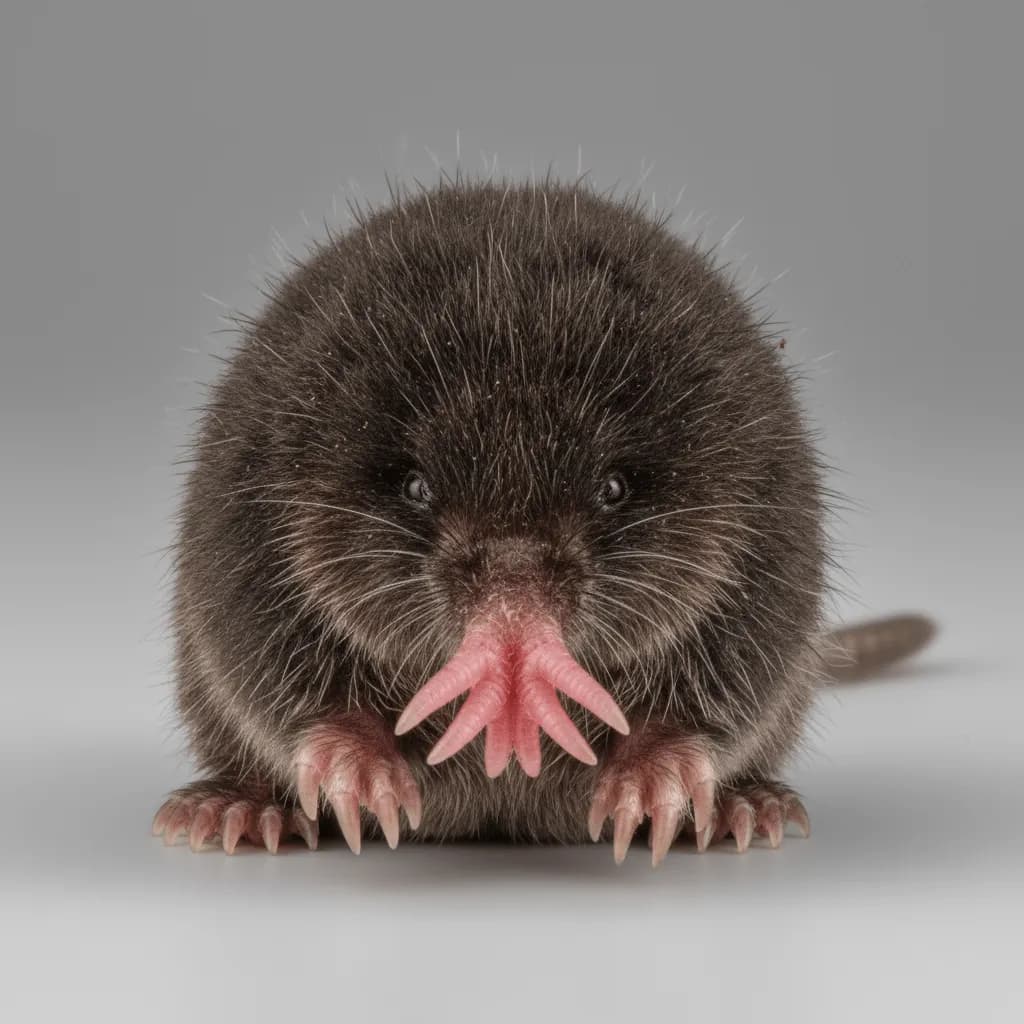
The Star-Nosed Mole is one of the most distinctive mammals in North America, instantly recognizable by the ring of 22 fleshy tentacles on its nose. Found in wet habitats across the northeastern United States and southeastern Canada, it is the only mole that routinely forages in water. While it causes lawn damage similar to other moles, it is less commonly encountered in dry residential settings.
Identification
Size
150-200 mm body length, plus 55-85 mm tail; 35-75 g
Color
Dark brown to black with dense, water-repellent fur
Key Trait
Unmistakable ring of 22 pink, fleshy tentacles surrounding the nose tip. Longer tail than other moles, which swells with fat reserves in winter. The fastest-eating mammal on earth, identifying and consuming food in under 230 milliseconds.
Behavior & Habitat
Semi-aquatic, equally at home tunneling through wet soil and swimming through streams and ponds. The star-shaped nose is the most sensitive touch organ in any mammal, containing over 25,000 sensory receptors. Active year-round, including under ice in winter. Forages both underground and underwater.
Habitat: Wet meadows, marshes, stream banks, lake shores, and low-lying wet areas. Less commonly found in typical residential lawns unless the property borders wetlands.
Diet: Aquatic invertebrates, earthworms, insect larvae, leeches, and small crustaceans. The most diverse diet of any North American mole species.
Signs of Infestation
- Raised surface tunnels and dirt mounds in wet, low-lying areas of the lawn
- Tunnel openings visible along stream banks, pond edges, and drainage ditches
- Tunneling activity concentrated in the wettest areas of the property
Risks & Damage
Creates surface tunnels and mounds that damage turf in wet areas of lawns and near water features.
Prevention Tips
- 1.Improve drainage in low-lying areas of the yard to reduce wet soil habitat
- 2.Install below-ground hardware cloth barriers around gardens adjacent to wetlands
- 3.Reduce irrigation in areas near wetland borders to make habitat less attractive
Why DIY Treatment Often Falls Short
Star-nosed moles inhabit wet, difficult-to-access areas where standard mole traps and treatments are less effective. Their semi-aquatic habits mean they have extensive tunnel networks along waterways that cannot be fully addressed with surface-level treatments.
Professional Treatment
Professionals assess the extent of tunneling and identify active runs in wet habitat. Specialized trapping approaches adapted for wet soil conditions are deployed. Drainage improvements and habitat modification reduce the property's attractiveness to this moisture-dependent species.
Frequently Asked Questions
What is the star-shaped structure on the nose?
Are star-nosed moles common in residential areas?
Can star-nosed moles swim?
Need Help With Star-nosed mole?
If you're seeing signs of star-nosed mole in or around your home, professional treatment is the fastest way to stop the problem. Lotus Pest Control offers free inspections to identify the issue and recommend the right solution.
At a Glance
- Category
- Rodents
- Scientific Name
- Condylura cristata
- Size
- 150-200 mm body length, plus 55-85 mm tail; 35-75 g
- Color
- Dark brown to black with dense, water-repellent fur
- Key Trait
- Unmistakable ring of 22 pink, fleshy tentacles surrounding the nose tip. Longer tail than other moles, which swells with fat reserves in winter. The fastest-eating mammal on earth, identifying and consuming food in under 230 milliseconds.
- Regions
- Northeast, Mid Atlantic, Midwest
- Threat Level
- Very Low
- Risk Types
- lawn
- Seasonal Activity
- MarAprMayJunJulAugSepOctNovDecJanFebnonelowmoderatehighpeak