
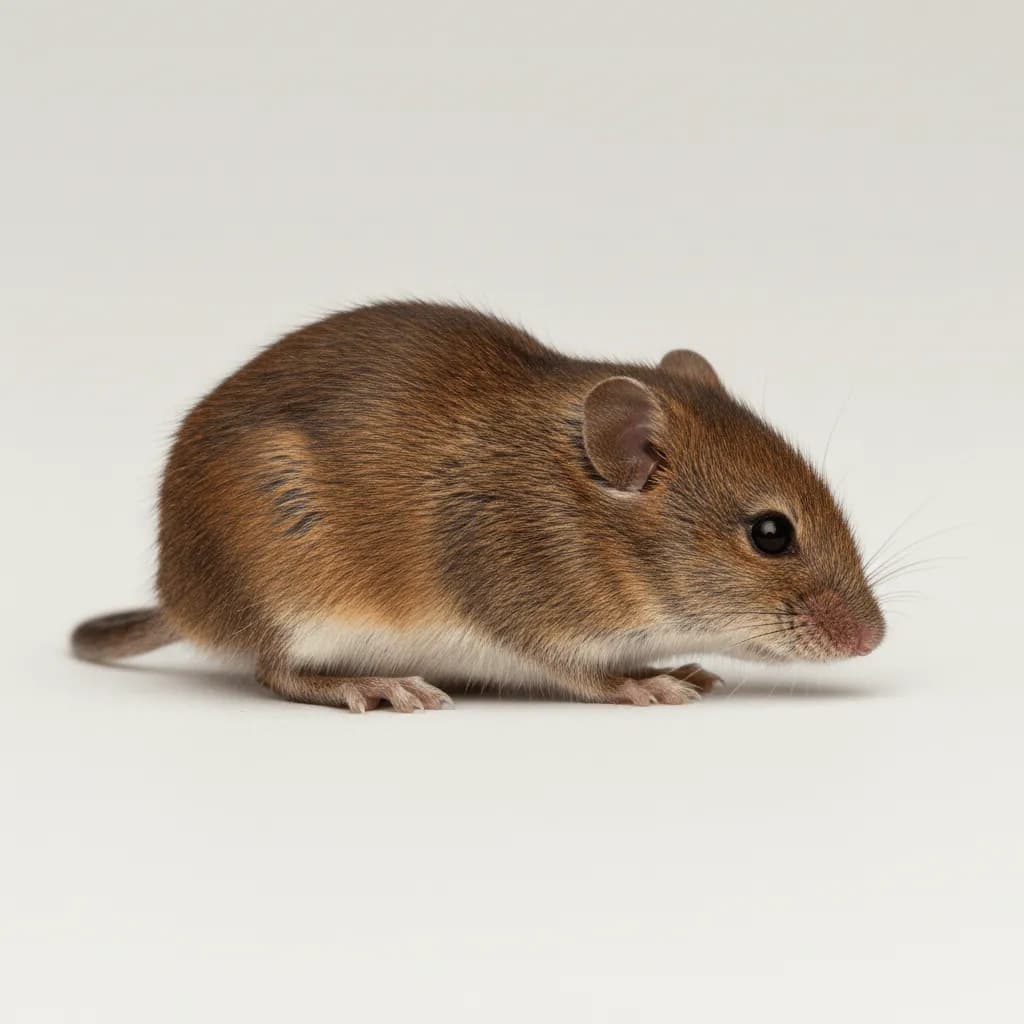
Meadow Vole
Microtus pennsylvanicus
Also known as: Field Mouse, Meadow Mouse
The Meadow Vole is the most common vole in North America and one of the most prolific mammals on earth, with some populations reaching densities of hundreds per acre. It is primarily a lawn and landscape pest that creates extensive runway systems through turf and girdles trees and shrubs in winter. Meadow voles rarely enter homes but cause significant damage to yards and orchards.
Identification
Size
89-120 mm body length, plus 33-64 mm tail; 33-65 g
Color
Dark brown to chestnut-brown with a grayish underside
Key Trait
Compact, stocky body with a short tail (much shorter than body length), small ears partially hidden by fur, and small eyes. Creates extensive surface runway systems through grass.
Behavior & Habitat
Active day and night year-round with no hibernation. Creates well-defined surface runways through grass that connect burrow openings, feeding areas, and nesting sites. Population cycles dramatically, peaking every 3-5 years. Girdling of trees and shrubs is most severe in winter under snow cover.
Habitat: Meadows, grasslands, orchards, lawns, gardens, and any area with dense grass or ground cover. Creates runway systems at the soil surface beneath vegetation or snow cover.
Diet: Grasses, sedges, clover, garden vegetables, bark, roots, and bulbs. In winter, gnaws bark from the base of trees and shrubs (girdling).
Signs of Infestation
- Distinct 1-2 inch wide surface runways clipped through lawn grass
- Girdled bark at the base of trees and shrubs, especially visible after snowmelt
- Small, greenish droppings scattered along runway systems
Risks & Damage
Creates extensive runway systems that damage turf, leaving unsightly trails across lawns.
Girdles orchard trees and ornamental plantings, potentially killing them. Damages garden crops and bulb plantings.
Prevention Tips
- 1.Keep grass mowed short, especially within 3 feet of tree trunks and garden beds
- 2.Install hardware cloth tree guards (1/4-inch mesh) around the base of valued trees and shrubs
- 3.Remove mulch and ground cover from direct contact with tree trunks
Why DIY Treatment Often Falls Short
Vole populations are enormous and recover quickly from trapping. Dense ground cover provides unlimited habitat, and removing a few voles has no measurable impact on lawn damage. Without habitat modification, populations rebound within weeks.
Professional Treatment
Professionals implement habitat modification including mowing, mulch management, and ground cover removal as the primary strategy. Targeted rodenticide bait applications in active runway systems reduce populations quickly. Tree guard installation protects valuable plantings during winter.
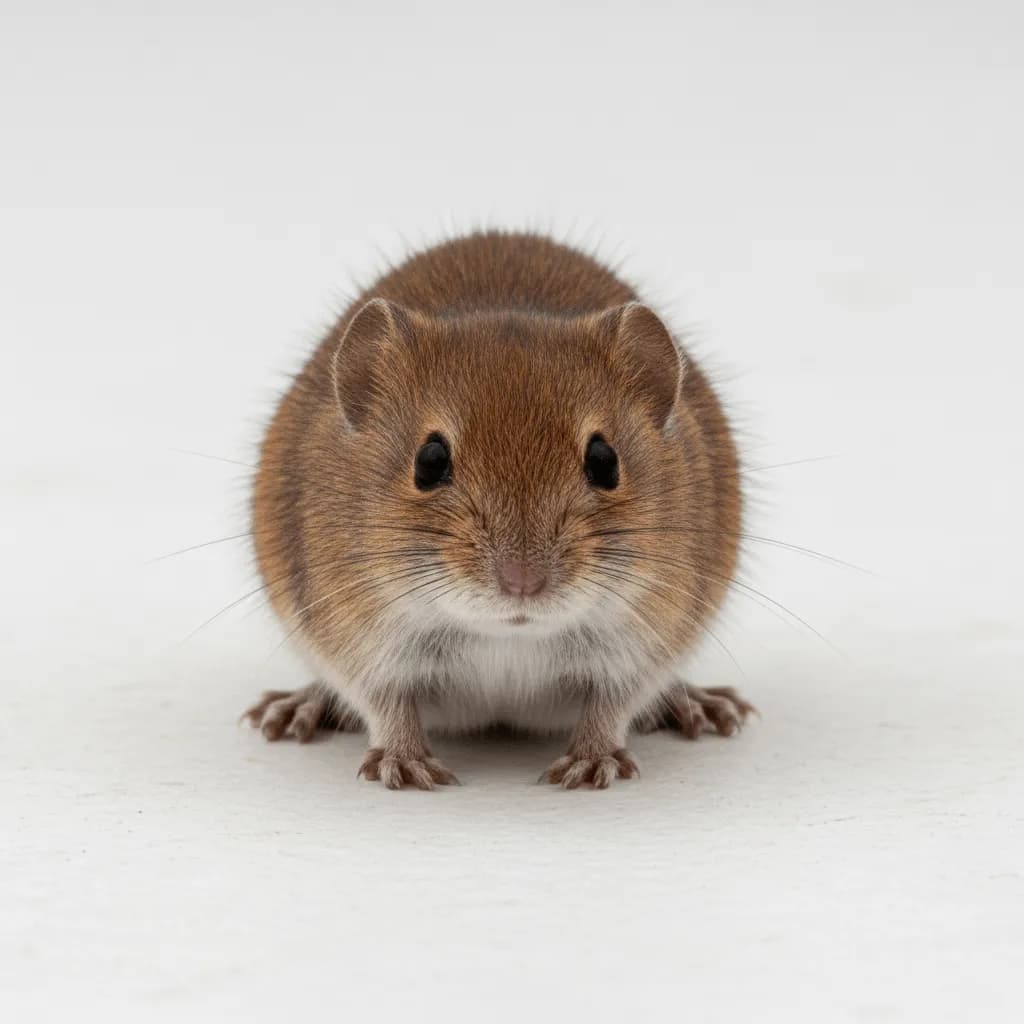

Frequently Asked Questions
What are the trails running through my lawn?
Are voles the same as moles?
Why are my tree trunks damaged at the base?
Need Help With Meadow vole?
If you're seeing signs of meadow vole in or around your home, professional treatment is the fastest way to stop the problem. Lotus Pest Control offers free inspections to identify the issue and recommend the right solution.
At a Glance
- Category
- Rodents
- Scientific Name
- Microtus pennsylvanicus
- Size
- 89-120 mm body length, plus 33-64 mm tail; 33-65 g
- Color
- Dark brown to chestnut-brown with a grayish underside
- Key Trait
- Compact, stocky body with a short tail (much shorter than body length), small ears partially hidden by fur, and small eyes. Creates extensive surface runway systems through grass.
- Regions
- Northeast, Midwest, Mid Atlantic, Great Plains, Pacific Northwest, Mountain West
- Threat Level
- Moderate
- Risk Types
- lawnagricultural
- Seasonal Activity
- MarAprMayJunJulAugSepOctNovDecJanFebnonelowmoderatehighpeak