
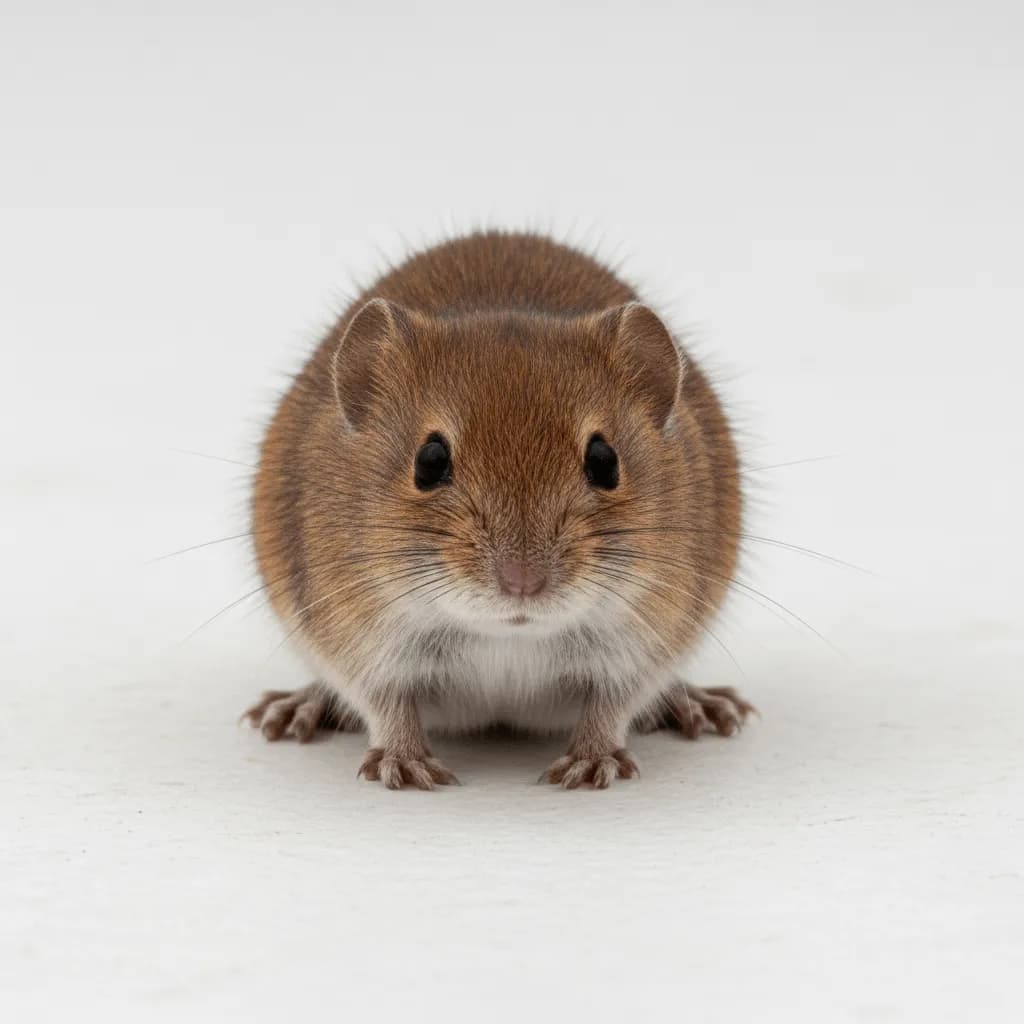
Prairie Vole
Microtus ochrogaster
Also known as: Prairie Mouse
The Prairie Vole inhabits grasslands, prairies, and dry meadows across the central United States. Like the meadow vole, it creates surface runway systems and damages turf and plantings, but it favors drier habitats. It is well-known in behavioral research for its monogamous pair bonding, unusual among rodents.
Identification
Size
85-130 mm body length, plus 25-40 mm tail; 30-50 g
Color
Grizzled yellowish-brown to dark brown with a grayish-buff underside
Key Trait
Very similar to the meadow vole but found in drier grassland habitats. Shorter tail and lighter coloration adapted to prairie environments. One of the few mammals known to form socially monogamous pair bonds.
Behavior & Habitat
Active day and night with peak activity at dawn and dusk. Forms monogamous pair bonds with biparental care of young. Creates surface runways similar to meadow voles but in drier grassland habitats. Population cycles less dramatically than meadow voles.
Habitat: Native prairies, dry meadows, grasslands, roadsides, and agricultural fields in the Great Plains and central states. Prefers drier conditions than the meadow vole.
Diet: Grasses, forbs, roots, tubers, seeds, and bark. Less dependent on succulent vegetation than the meadow vole.
Signs of Infestation
- Surface runway systems through dry grass and prairie vegetation
- Clipped grass stems and plant debris piled at runway junctions
- Damage to garden plantings and landscaping in prairie-adjacent properties
Risks & Damage
Creates surface runways through turf and damages ornamental plantings in prairie-adjacent yards.
Damages crops, particularly alfalfa and clover, in agricultural fields.
Prevention Tips
- 1.Maintain short mowing height around structures and garden beds
- 2.Remove dense ground cover and tall grass near landscaped areas
- 3.Install hardware cloth barriers around garden beds and valued plantings
Why DIY Treatment Often Falls Short
Prairie vole populations are sustained by the vast grassland habitat surrounding properties. Trapping in a yard removes a tiny fraction of the population, which is immediately replaced by voles from adjacent fields and roadsides.
Professional Treatment
Professionals focus on habitat modification and buffer zone creation between prairie habitat and landscaped areas. Targeted rodenticide applications in active runway systems provide short-term relief. Long-term management requires maintaining a mowed buffer and protecting valued plantings with hardware cloth.
Related Pests
Frequently Asked Questions
How are prairie voles different from meadow voles?
Can prairie voles damage my lawn?
Why are prairie voles famous in science?
Need Help With Prairie vole?
If you're seeing signs of prairie vole in or around your home, professional treatment is the fastest way to stop the problem. Lotus Pest Control offers free inspections to identify the issue and recommend the right solution.
At a Glance
- Category
- Rodents
- Scientific Name
- Microtus ochrogaster
- Size
- 85-130 mm body length, plus 25-40 mm tail; 30-50 g
- Color
- Grizzled yellowish-brown to dark brown with a grayish-buff underside
- Key Trait
- Very similar to the meadow vole but found in drier grassland habitats. Shorter tail and lighter coloration adapted to prairie environments. One of the few mammals known to form socially monogamous pair bonds.
- Regions
- Great Plains, Midwest, Mountain West
- Threat Level
- Low
- Risk Types
- lawnagricultural
- Seasonal Activity
- MarAprMayJunJulAugSepOctNovDecJanFebnonelowmoderatehighpeak