
Rodent
Rodents - primarily house mice, Norway rats, and roof rats - are among the most problematic and destructive pests in the United States. They have lived alongside humans for thousands of years, exploiting our homes for food, water, and shelter. Mice can squeeze through openings as small as a dime, while young rats can fit through a quarter-sized gap, giving them access to almost any structure. Rodents cause billions of dollars in damage annually by gnawing through wiring, insulation, plumbing, and structural materials. They also represent a serious health concern, contaminating food and surfaces with urine, droppings, and the pathogens they carry.

Species Covered
15
Species Groups
5
Common Traits
All commensal rodents are gnawing mammals with continuously growing incisors that compel them to chew constantly to keep their teeth worn down. They are highly adaptable, prolific breeders, and primarily nocturnal. Mice and rats are neophobic or neophilic to varying degrees - rats tend to be cautious around new objects, while mice are curious - which affects the trapping and baiting strategies used against them.
Species in This Category

Rats
3 species
Rats are among the most destructive and historically significant pests, responsible for food contamination, structural damage, disease transmission, and fire hazards from gnawing on electrical wiring.
Mice
3 species
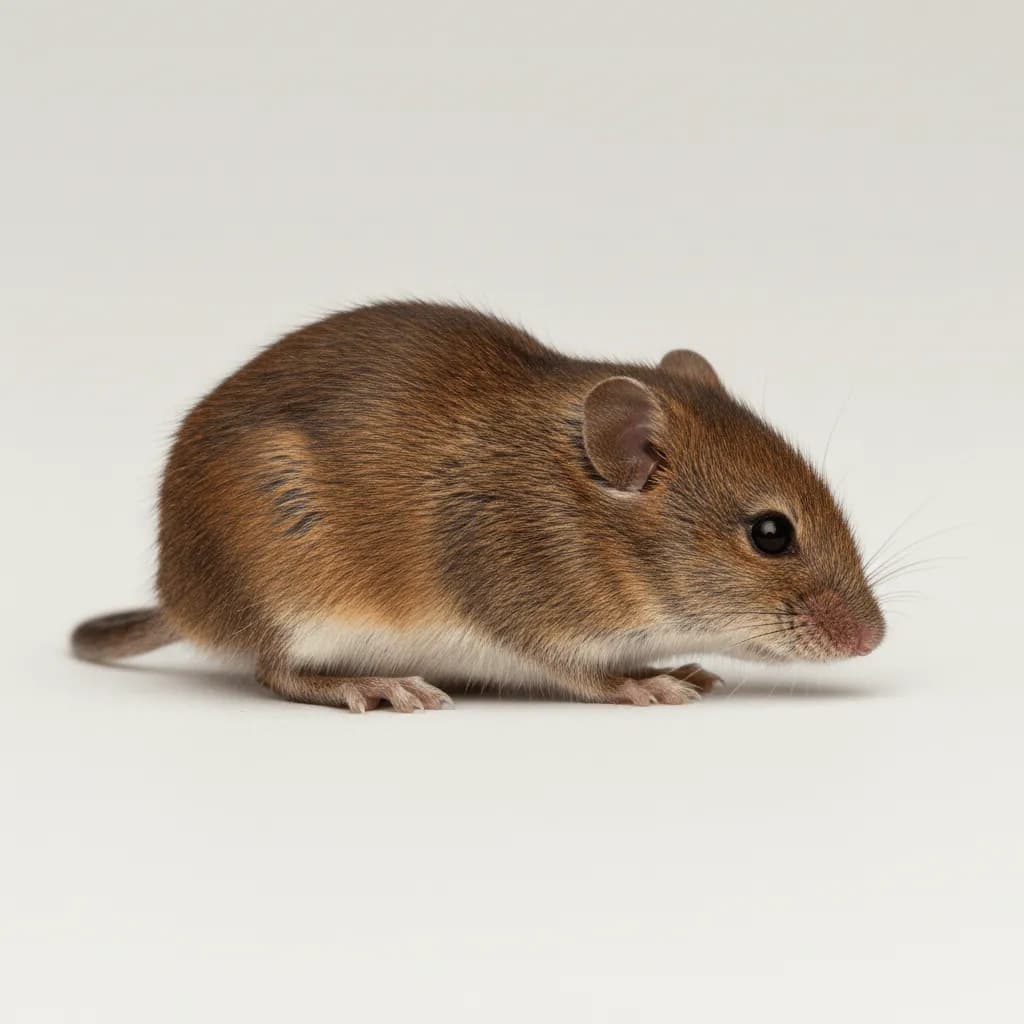
Mice are the most common rodent pest in the United States, with the house mouse being found in virtually every state and community.
Voles
3 species
Voles are small, stocky rodents that cause extensive damage to lawns, gardens, orchards, and ornamental plantings.

Moles
3 species
Moles are insectivorous mammals with powerful, broad front paws adapted for digging that create conspicuous tunnel systems and soil mounds in lawns and gardens.

Shrews
2 species
Shrews are tiny, hyperactive, insectivorous mammals with pointed snouts and tiny eyes that are occasionally encountered in homes, garages, and basements.
All Rodent
Signs of Infestation
- Droppings - small, dark pellets found along walls, in cabinets, and near food sources
- Gnaw marks on food packaging, wood, plastic, and even electrical wiring
- Greasy rub marks (sebum trails) along baseboards and walls where rodents repeatedly travel
- Scratching, scurrying, or squeaking sounds in walls, ceilings, or attics at night
- Nests made of shredded paper, fabric, insulation, or other soft materials in hidden areas
- An ammonia-like odor from urine accumulation, particularly in enclosed spaces
Prevention
Rodent prevention requires a three-pronged approach: exclusion (sealing entry points), sanitation (removing food and water sources), and habitat modification (reducing harborage around the structure). Steel wool combined with caulk, copper mesh, and hardware cloth are effective materials for sealing gaps. Keeping food in rodent-proof containers, managing trash, and eliminating clutter inside and outside the home deprive rodents of the resources they need.
Frequently Asked Questions
How do I know if I have mice or rats?
Can rodents really cause house fires?
Are snap traps or poison bait better for rodent control?
How many rodents are in my house if I see one?
Why do rodents keep coming back after treatment?
Is it safe to clean up rodent droppings myself?
Need Help With Rodent?
If you're seeing signs of rodent in or around your home, professional treatment is the fastest way to stop the problem. Lotus Pest Control offers free inspections to identify the issue and recommend the right solution.