
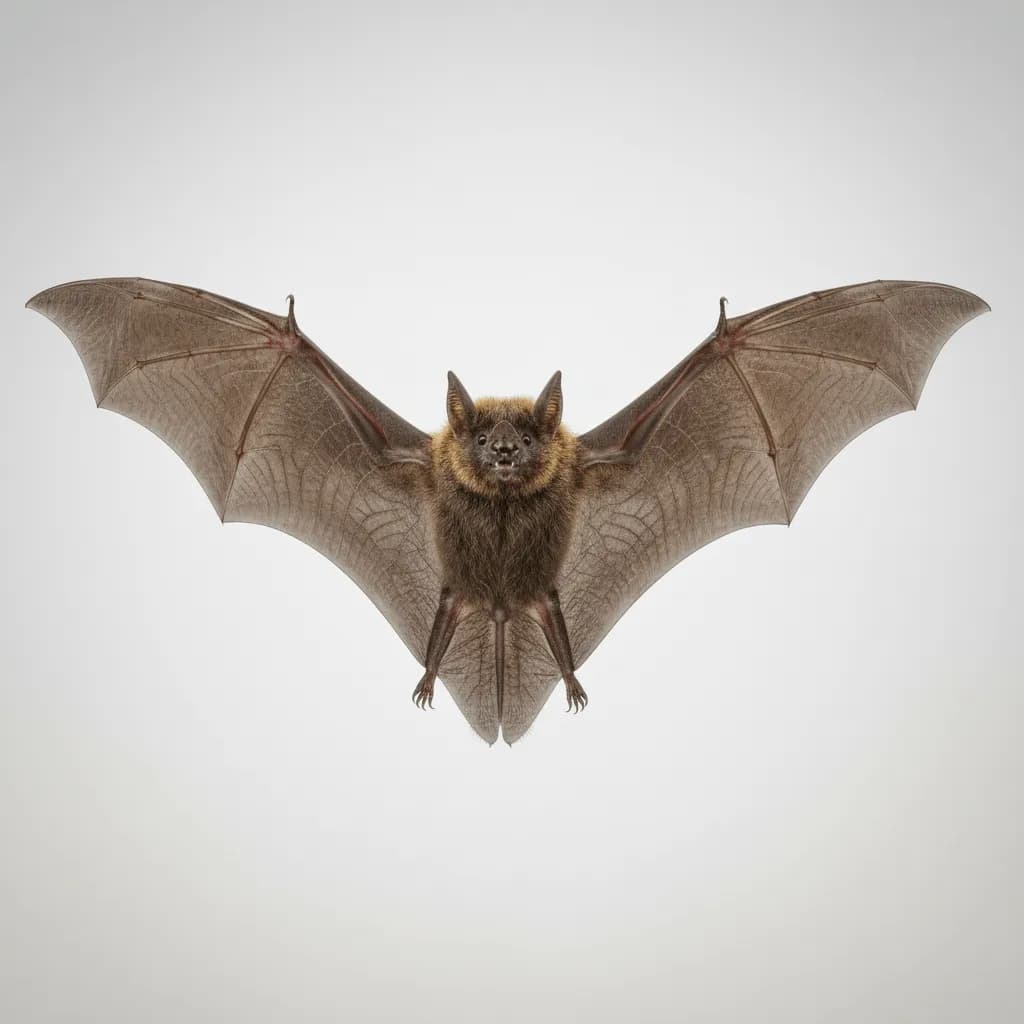
Big Brown Bat
Eptesicus fuscus
The Big Brown Bat is the most common bat found in buildings across North America. It forms maternity colonies of 20-300 individuals in attics, behind shutters, and in wall voids. While it is extremely beneficial as an insect predator, guano accumulation and the risk of rabies exposure make colonies in living spaces a serious concern.
Identification
Size
110-130 mm body; wingspan 325-350 mm
Color
Glossy dark brown fur; lighter on the belly; dark brown to black wing membranes, ears, and face
Key Trait
Relatively large and robust for a house-dwelling bat; glossy brown fur; broad face with a blunt nose; slow, steady flight pattern.
Behavior & Habitat
Nocturnal. Forms maternity colonies in warm attic spaces in spring and summer. Enters structures through gaps as small as 1.5 cm. One of few North American bat species that can survive winter in buildings rather than migrating or entering caves. Consumes large quantities of beetles and other night-flying insects.
Habitat: Forests, farmland, suburbs, and cities. Roosts in attics, barns, bridges, behind shutters, and in wall voids. One of the most building-adapted bat species.
Diet: Beetles (primary prey), moths, flies, wasps, and other night-flying insects. A single bat can eat thousands of insects per night.
Signs of Infestation
- Dark, greasy rub marks around small entry gaps on the roofline or fascia
- Accumulation of small, dark, pellet-shaped droppings (guano) below roost sites
- Bats observed emerging from the building at dusk in a steady stream
Risks & Damage
Primary rabies vector among bats. Histoplasmosis risk from accumulated guano, which harbors the fungus Histoplasma capsulatum.
Large guano deposits damage insulation, stain ceilings, and create persistent odor. Urine corrodes wood and metal.
Chittering and scratching sounds in walls and attics; occasional bats entering living spaces.
Prevention Tips
- 1.Inspect the roofline at dusk for bats emerging and mark all exit points
- 2.Seal gaps larger than 1.5 cm along the roofline, soffits, and around chimneys - but only after excluding bats
- 3.Install bat houses on the property to provide alternative roosting sites
Why DIY Treatment Often Falls Short
Federal and state laws protect bat maternity colonies during summer, making timing critical. Sealing entry points while bats are inside traps them, causing them to enter living spaces. Improper guano cleanup without respiratory protection risks histoplasmosis.
Professional Treatment
Certified bat exclusion specialists install one-way exclusion devices during legal exclusion windows (typically late summer through early spring, outside maternity season). After all bats have departed, every gap is permanently sealed. Guano removal is performed with HEPA-filtered equipment and appropriate respiratory protection.
Frequently Asked Questions
Is it legal to kill bats?
Can I get rabies from bat guano?
How do bats get into my house?
Need Help With Big brown bat?
If you're seeing signs of big brown bat in or around your home, professional treatment is the fastest way to stop the problem. Lotus Pest Control offers free inspections to identify the issue and recommend the right solution.
At a Glance
- Category
- Wildlife
- Scientific Name
- Eptesicus fuscus
- Size
- 110-130 mm body; wingspan 325-350 mm
- Color
- Glossy dark brown fur; lighter on the belly; dark brown to black wing membranes, ears, and face
- Key Trait
- Relatively large and robust for a house-dwelling bat; glossy brown fur; broad face with a blunt nose; slow, steady flight pattern.
- Regions
- Northeast, Midwest, Mid Atlantic, Southeast, Great Plains, Mountain West, Pacific Northwest, West Coast, Southwest, Gulf Coast
- Threat Level
- Moderate
- Risk Types
- healthstructuralnuisance
- Seasonal Activity
- MarAprMayJunJulAugSepOctNovDecJanFebnonelowmoderatehighpeak