
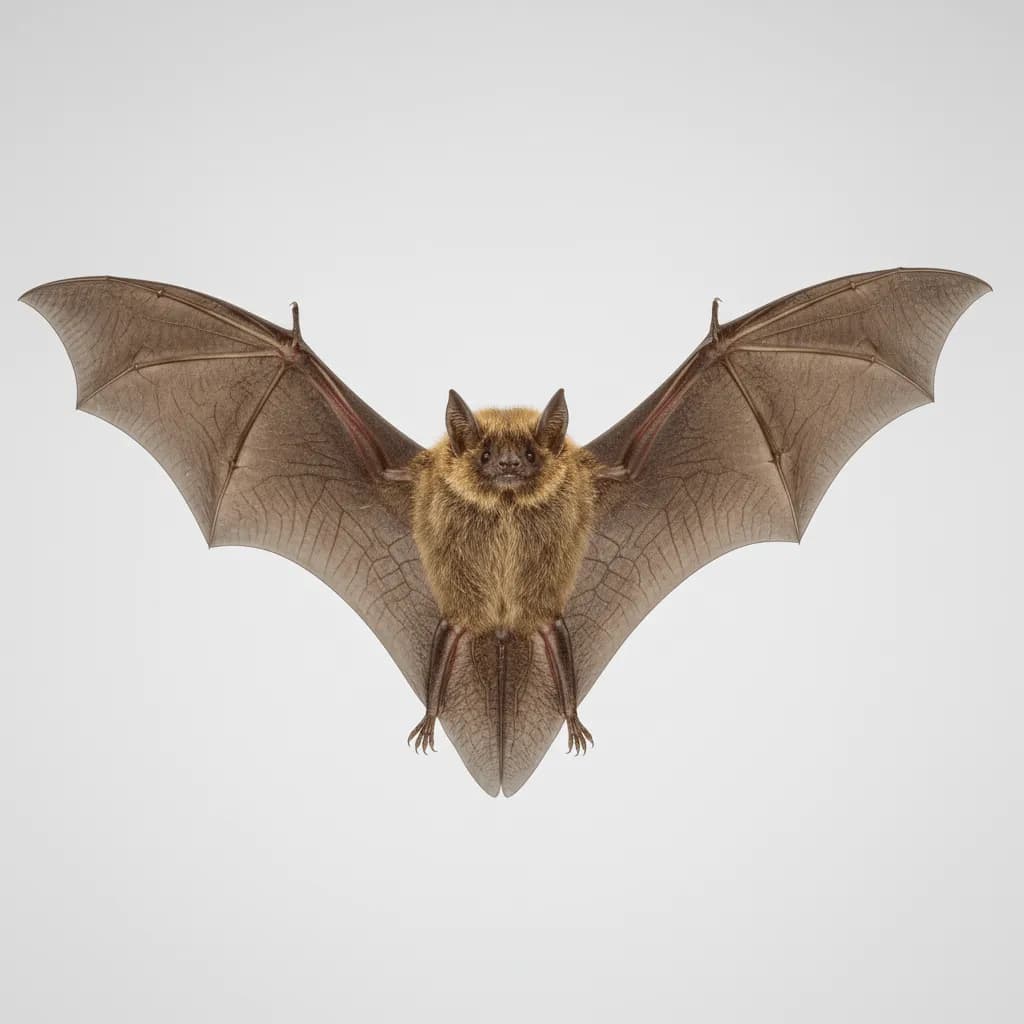
Evening Bat
Nycticeius humeralis
The Evening Bat is a common southeastern species that roosts exclusively in tree cavities and buildings, never in caves. It forms maternity colonies of 25 - several hundred individuals in attics and wall voids. Because it does not use caves, building exclusion is the primary management approach.
Identification
Size
80-100 mm body; wingspan 260-280 mm
Color
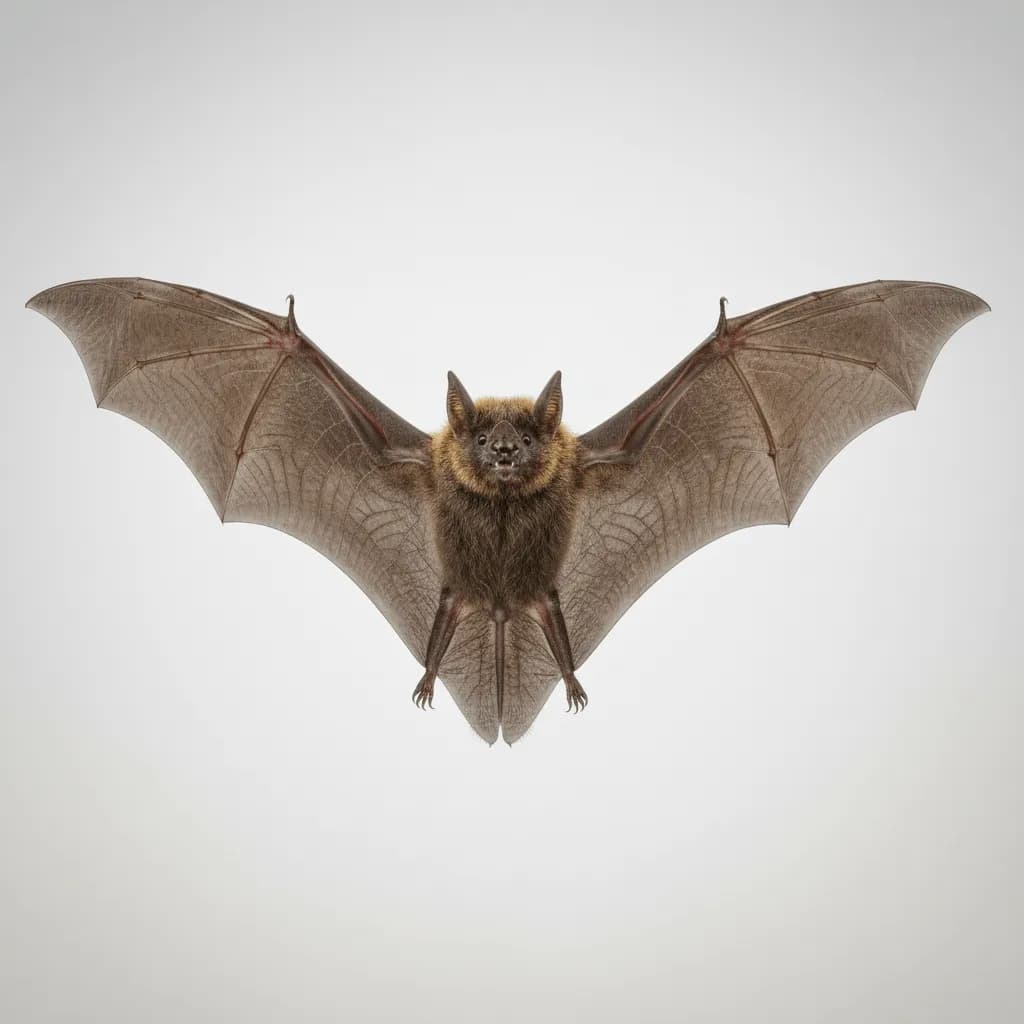
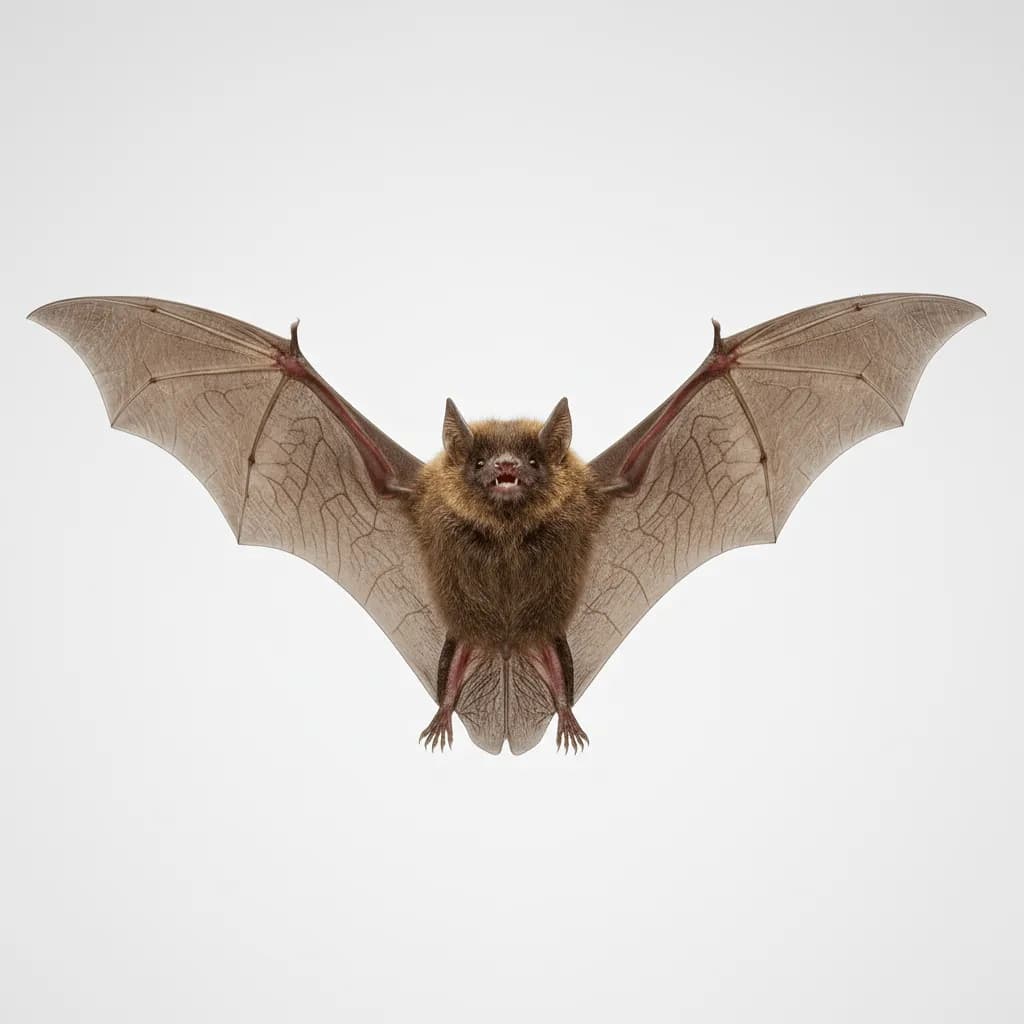
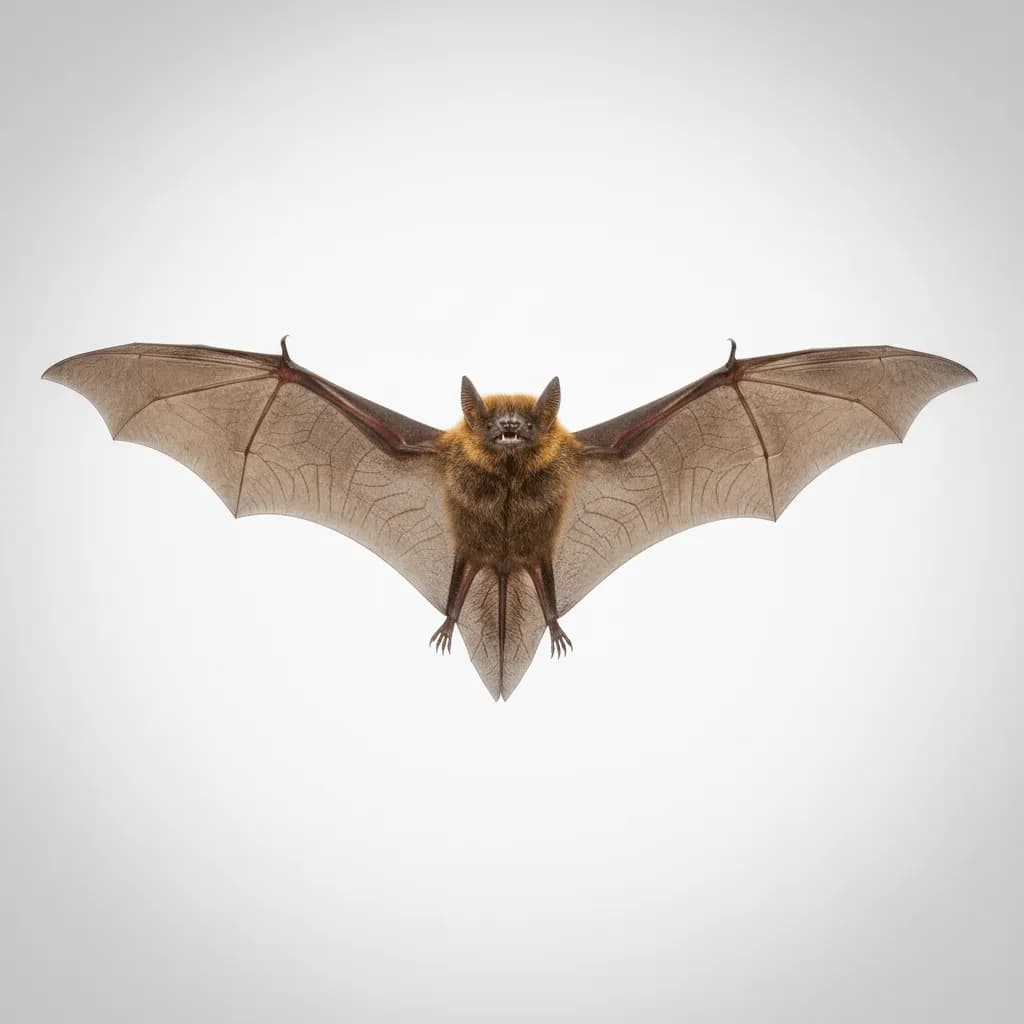
Dark brown fur with slightly lighter underparts; dark brown to black wing membranes and ears
Key Trait
Medium-sized bat with a blunt, rounded tragus (unlike the pointed tragus of Myotis species); short, rounded ears; exclusively roosts in buildings and tree cavities rather than caves.
Behavior & Habitat
Nocturnal. Emerges early in the evening, often before full darkness. Forms maternity colonies in attics and behind shutters in spring and summer. Does not hibernate in caves; southern populations remain active in winter while northern ones migrate short distances south.
Habitat: Forested and suburban areas in the southeastern and eastern U.S. Roosts in tree cavities, behind bark, and in building attics, wall voids, and behind shutters.
Diet: Beetles, moths, flies, and other flying insects caught in forest clearings and over waterways.
Signs of Infestation
- Bats emerging from roofline gaps or behind shutters in the early evening
- Small accumulations of guano on windowsills, patios, or attic floors
- Faint squeaking or chittering sounds from wall voids or attic spaces
Risks & Damage
Potential rabies vector. Guano accumulation poses histoplasmosis risk, though colonies are typically smaller than big brown or free-tailed bat colonies.
Colony noise and odor in attics; occasional bats entering living spaces through gaps.
Guano and urine stain and degrade building materials over time.
Prevention Tips
- 1.Inspect behind shutters and along rooflines for small entry gaps in late summer
- 2.Seal gaps after professional exclusion during the permitted window
- 3.Install bat houses on nearby trees to provide alternative roost sites
Why DIY Treatment Often Falls Short
Evening bats use small, inconspicuous entry points that homeowners often miss. Colonies behind shutters and in narrow wall voids are difficult to access. Maternity season timing restrictions apply in most states.
Professional Treatment
Professionals inspect behind shutters and along all trim lines for entry points. One-way exclusion devices are installed during legal windows. After bats depart, all openings are sealed and guano is cleaned with appropriate safety equipment.
Frequently Asked Questions
How is an evening bat different from a brown bat?
Do evening bats hibernate?
Are evening bat colonies as large as other species?
Need Help With Evening bat?
If you're seeing signs of evening bat in or around your home, professional treatment is the fastest way to stop the problem. Lotus Pest Control offers free inspections to identify the issue and recommend the right solution.
At a Glance
- Category
- Wildlife
- Scientific Name
- Nycticeius humeralis
- Size
- 80-100 mm body; wingspan 260-280 mm
- Color
- Dark brown fur with slightly lighter underparts; dark brown to black wing membranes and ears
- Key Trait
- Medium-sized bat with a blunt, rounded tragus (unlike the pointed tragus of Myotis species); short, rounded ears; exclusively roosts in buildings and tree cavities rather than caves.
- Regions
- Southeast, Gulf Coast, Mid Atlantic, Midwest, Great Plains
- Threat Level
- Low
- Risk Types
- healthnuisancestructural
- Seasonal Activity
- MarAprMayJunJulAugSepOctNovDecJanFebnonelowmoderatehighpeak