
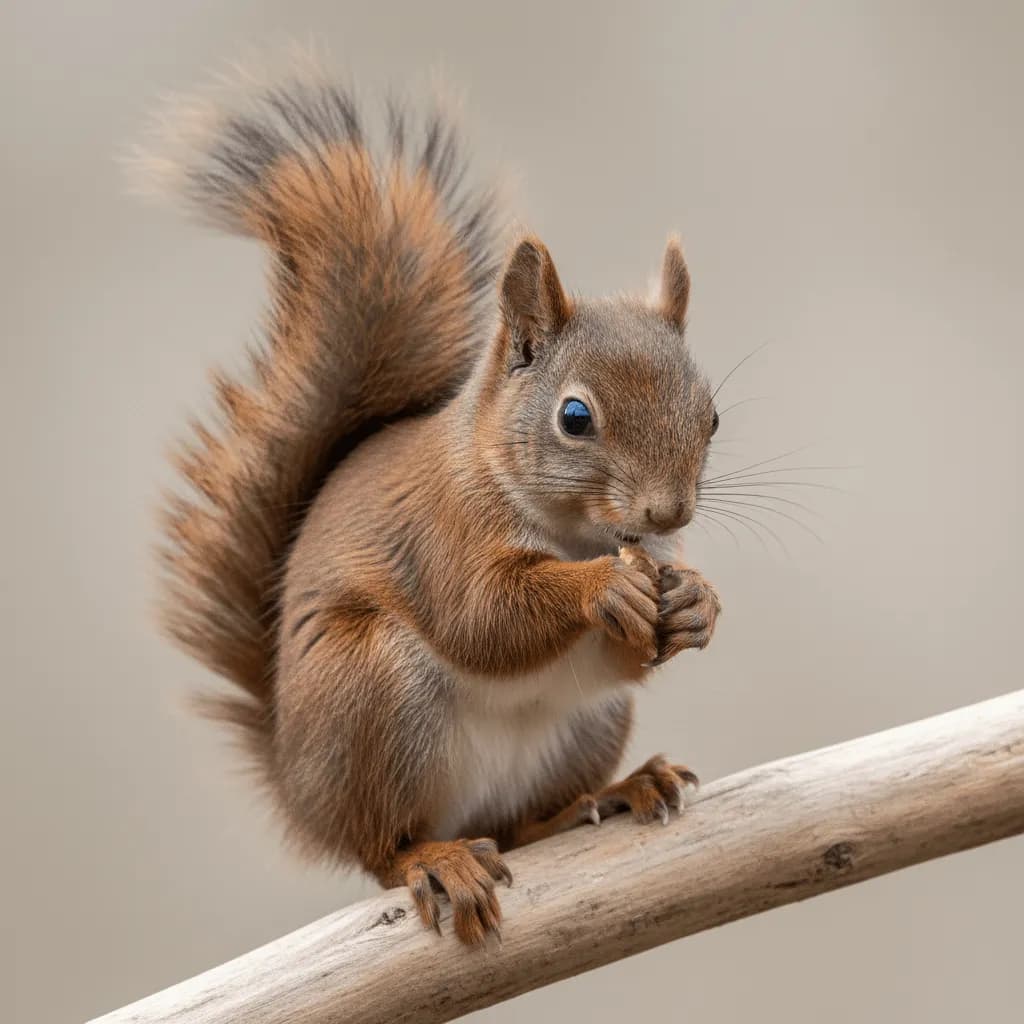
Red Squirrel
Tamiasciurus hudsonicus
Also known as: Pine Squirrel, Chickaree
The Red Squirrel is a small, vocal, and highly territorial tree squirrel found across northern forests and mountain regions. It aggressively defends its territory with loud chattering calls. Red squirrels frequently enter attics, cabins, and outbuildings in rural and mountain settings, where they cache enormous quantities of pine cones and seeds.
Identification
Size
170-200 mm body; tail adds 130-160 mm
Color
Rusty red to olive-red above with a bright white underside; often a distinct black lateral stripe between belly and back in summer
Key Trait
Small size with vivid rusty-red fur; loud, chattering vocalizations; white eye ring; black side stripe visible in summer pelage.
Behavior & Habitat
Diurnal and active year-round. Extremely territorial and vocal. Creates large middens - piles of stripped cone scales - at the base of favored trees. Enters structures to cache food and nest, often gnawing entry holes through wooden siding.
Habitat: Coniferous and mixed forests, mountain cabins, and rural homes near evergreen stands. Prefers spruce, fir, and pine habitats.
Diet: Conifer seeds and cones (primary diet), mushrooms, tree buds, bark, sap, berries, bird eggs, and cached food stores.
Signs of Infestation
- Large piles of stripped pine cone scales (middens) near the structure
- Gnawed holes in wooden siding, soffits, or cabin walls
- Noisy chattering from the attic or eaves during daylight
Risks & Damage
Gnaws holes through wooden siding and roofing; caches of damp cones and seeds can cause moisture damage and mold.
Chews on wiring in attics and wall cavities.
Extremely loud vocalizations and persistent territorial behavior.
Prevention Tips
- 1.Seal all gaps in wooden siding and soffits with metal flashing
- 2.Trim conifer branches away from the roofline
- 3.Remove brush piles and debris that provide cover near the foundation
Why DIY Treatment Often Falls Short
Red squirrels are extremely persistent and territorial. A single individual will spend hours gnawing through repairs to reclaim its cached food store. DIY sealants and foam are quickly destroyed.
Professional Treatment
Professionals use live traps and one-way exclusion devices, then reinforce all entry points with galvanized steel. Cached food and contaminated insulation are removed to eliminate the odor cues that attract return visits.
Frequently Asked Questions
Why are red squirrels so noisy?
Do red squirrels damage trees?
Are red squirrels aggressive toward people?
Need Help With Red squirrel?
If you're seeing signs of red squirrel in or around your home, professional treatment is the fastest way to stop the problem. Lotus Pest Control offers free inspections to identify the issue and recommend the right solution.
At a Glance
- Category
- Wildlife
- Scientific Name
- Tamiasciurus hudsonicus
- Size
- 170-200 mm body; tail adds 130-160 mm
- Color
- Rusty red to olive-red above with a bright white underside; often a distinct black lateral stripe between belly and back in summer
- Key Trait
- Small size with vivid rusty-red fur; loud, chattering vocalizations; white eye ring; black side stripe visible in summer pelage.
- Regions
- Northeast, Mountain West, Pacific Northwest, Midwest, Great Plains
- Threat Level
- Low
- Risk Types
- structuralelectricalnuisance
- Seasonal Activity
- MarAprMayJunJulAugSepOctNovDecJanFebnonelowmoderatehighpeak